Beyond the Flask: Elden Ring's Most Creative Healing Methods
Discover the game-changing unconventional healing techniques in Elden Ring that go beyond the Flask of Crimson Tears, including the vampiric Devourer of Worlds skill and the brutal Lifesteal Fist, to transform your Tarnished into an immortal force.
In the treacherous Lands Between, survival often hinges on more than just chugging crimson potions. While most Tarnished warriors rely exclusively on their Flask of Crimson Tears or the occasional healing incantation, FromSoftware has woven a tapestry of alternative restoration methods throughout Elden Ring—some conventional, others delightfully bizarre. These unconventional healing techniques, when properly combined, can transform a struggling adventurer into an nearly immortal force, regenerating health through combat itself rather than retreating to safety.
The Devourer's Approach: Area Healing Through Destruction
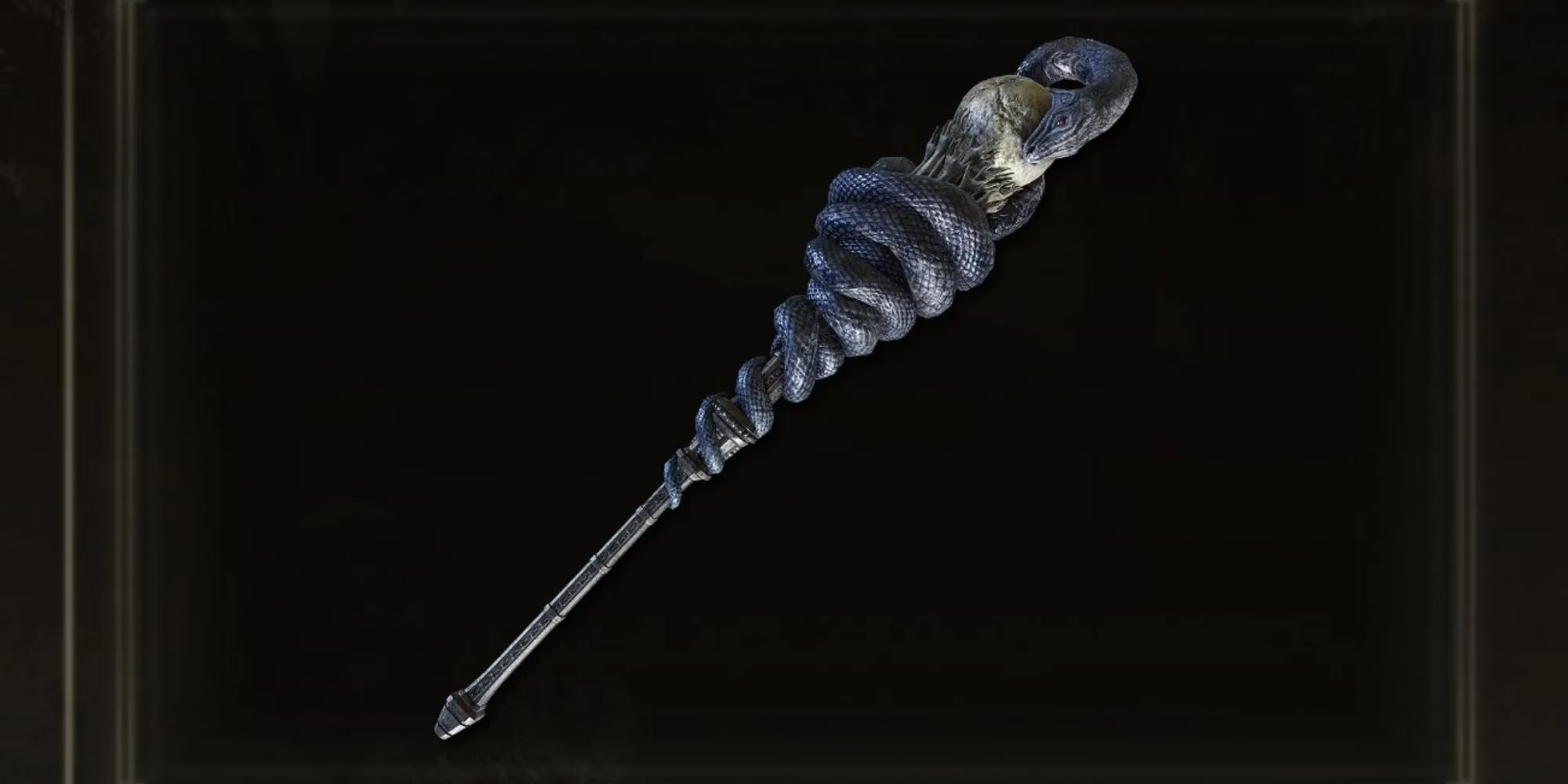
The Devourer of Worlds skill, exclusive to the Devourer's Scepter, operates like a vampiric explosion—consuming the life force of multiple enemies simultaneously. This weapon skill unleashes a wide-radius fire attack that grants HP based on the number of foes caught in its blazing embrace. While the ability suffers from sluggish execution and modest damage output, it shines in specific scenarios where enemies cluster like moths around a flame.
The true potential of this skill emerges when wielded by the Mimic Tear Ashes spirit summon. With its bottomless FP reserves and substantial health pool, the Mimic transforms this otherwise clunky ability into a reliable healing engine. Knight Bernahl, first encountered at the Warmaster's Shack in Stormhill, drops this unique scepter upon his defeat.
Fist of Life: The Stunning Drain

Veterans of FromSoftware's dark fantasy catalog will recognize the spiritual successor to Dark Souls' Dark Hand in the Ash of War: Lifesteal Fist. This brutal technique allows warriors to deliver a devastating punch that staggers humanoid opponents while siphoning 30 percent of maximum HP directly from their essence. The skill description claims it only affects "foes of human build," yet its reach extends surprisingly far—working on towering Crucible Knights, savage Misbegotten Warriors, and even the amorphous Silver Tears in their blob form.
Despite its impressive healing potential, Lifesteal Fist demands precise timing and positioning. Most bosses remain immune to its effects, and even vulnerable targets require careful approach to land successfully. The Teardrop Scarab carrying this Ash of War scuttles northwest of the Astray From Caelid Highway North Site of Grace in the scarlet rot-infested region of Caelid.
Blood Tax: The Rapid Strike Recovery

The Ash of War: Blood Tax transforms weapons into life-draining instruments through a flurry of rapid thrusts. Each successful strike in the combo restores a modest amount of HP, accumulating into substantial healing when the full sequence connects. Paradoxically, despite its sanguine nomenclature, Blood Tax doesn't inherently cause bleed buildup—instead, it amplifies whatever status effect the weapon carries, making it a versatile choice for status-focused builds.
This skill comes standard on Varré's Bouquet, widely considered among the weakest weapons in the game. Fortunately, the standalone Ash of War can be harvested from a Teardrop Scarab dwelling in a cave within the eastern section of Moghwyn Palace's crimson lake—allowing players to transplant this ability onto more formidable armaments.
Sustained Combat Healing: The Swaddling Strategy
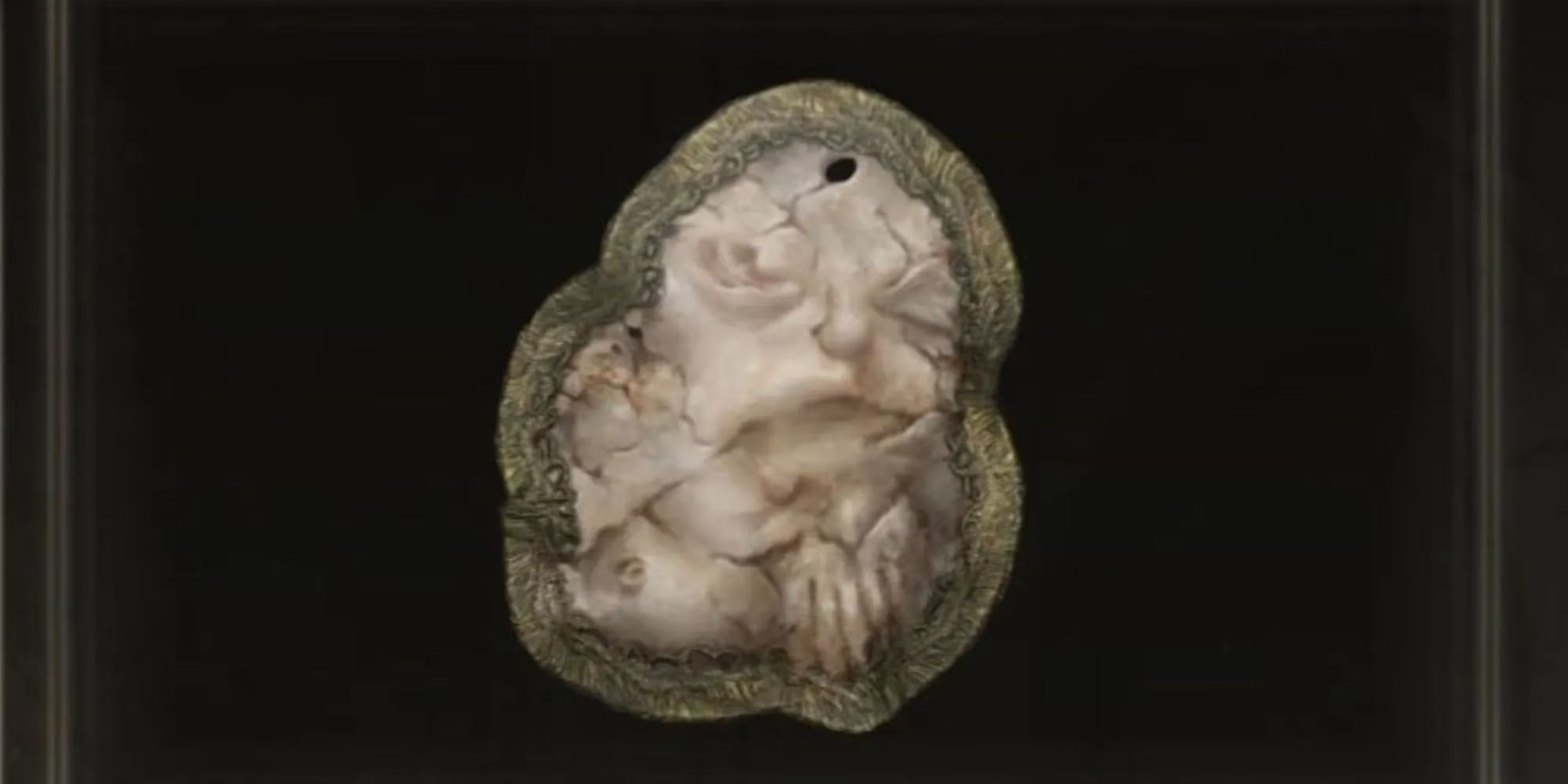
The Godskin Swaddling Cloth talisman rewards aggressive, relentless combat styles by triggering healing after landing consecutive attacks. Its mechanics mirror those of Millicent's Prosthesis and the Rotten Winged Sword Talisman, creating natural synergy for builds already incorporating these items. However, this approach demands a fundamental shift in defensive philosophy—trading the safety of dodge-rolling for the sustained pressure of continuous assault.
Key Synergies:
-
Millicent's Prosthesis (attack power boost)
-
Rotten Winged Sword Talisman (successive attack bonus)
-
Fast-attacking weapon classes (dual-wielded weapons, whips, fist weapons)
This late-game talisman drops from the Spirit-Caller Snail boss lurking at the depths of Spiritcaller Cave in the Mountaintops of the Giants, making it a reward reserved for seasoned Tarnished.
The Executioner's Reward: Kill-Based Regeneration

Elden Ring features multiple items that restore health upon enemy elimination, functioning like a vampiric victory celebration. The most prominent examples include:
| Item | Effect | Acquisition |
|---|---|---|
| Blasphemous Blade | HP on kill + weapon skill healing | Defeat Rykard, Lord of Blasphemy |
| Taker's Cameo | HP restoration per enemy defeated | Volcano Manor questline |
| Rykard's Great Rune | Enhanced HP recovery on kills | Activate at Divine Tower of West Altus |
Individually, these items provide modest sustain during exploration. Their true power emerges when stacked together, creating a healing cascade with each fallen foe. While this strategy offers limited utility against solitary bosses, it transforms overworld exploration into a self-sustaining journey, dramatically reducing flask consumption. Multi-entity boss encounters—such as the Godskin Duo or Valiant Gargoyles—become particularly manageable with this approach.
Critical Strike Restoration: The Assassin's Method
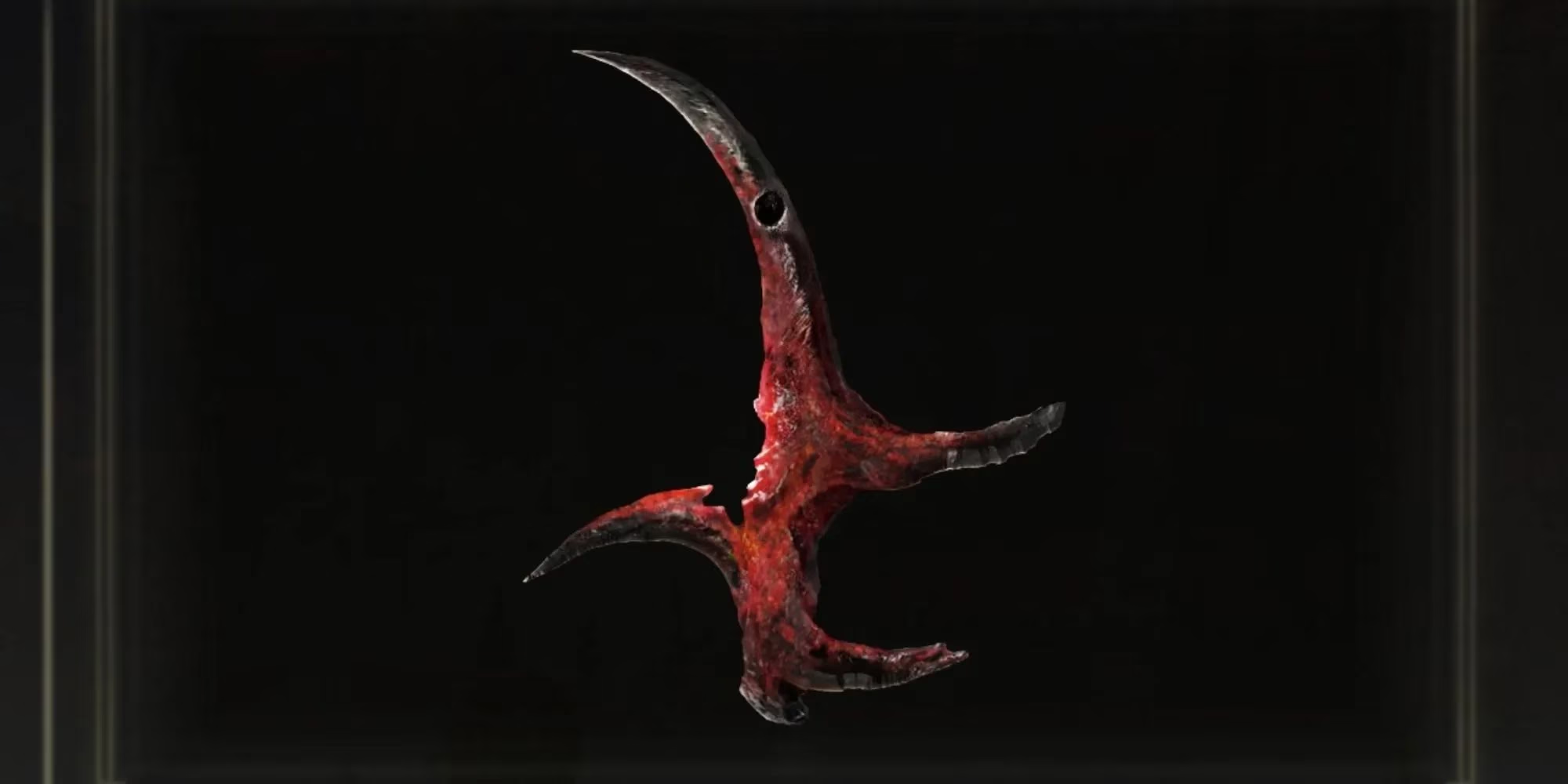
The Assassin's Crimson Dagger talisman rewards technical combat mastery by granting substantial healing whenever critical attacks—backstabs or ripostes—connect successfully. This talisman naturally complements builds designed around poise-breaking or parrying, offering significant health restoration as payment for skillful execution.
An interesting quirk emerges with certain weapon classes: Colossal Weapons and Daggers sometimes trigger the talisman's effect multiple times during a single critical animation, as their riposte sequences strike enemies twice. This early-game talisman drops from a Black Knife Assassin prowling the Deathtouched Catacombs in Stormhill, and pairs beautifully with the Assassin's Cerulean Dagger for simultaneous HP and FP recovery.
Elemental Conversion: The Crimsonwhorl Defense

While several Crystal Tears provide straightforward healing when mixed into the Flask of Wondrous Physick, the Crimsonwhorl Bubbletear operates on an entirely different principle—it doesn't just heal, it transforms incoming magical damage into restoration. For a brief window after consumption, all non-physical damage becomes fuel for your health bar rather than a threat to it.
This effect proves devastating against spell-heavy opponents in PvP duels and completely neutralizes certain boss mechanics. Most notably, it renders the Elden Beast's signature Elden Stars incantation—normally a persistent, unavoidable damage source—into a healing fountain. This powerful Crystal Tear awaits collection on a cliff ledge above the Giants' Gravepost Site of Grace in the Mountaintops of the Giants, guarded by a cluster of Fingercreepers.
Chaos-Infused Recovery: The Frenzyflame Alternative
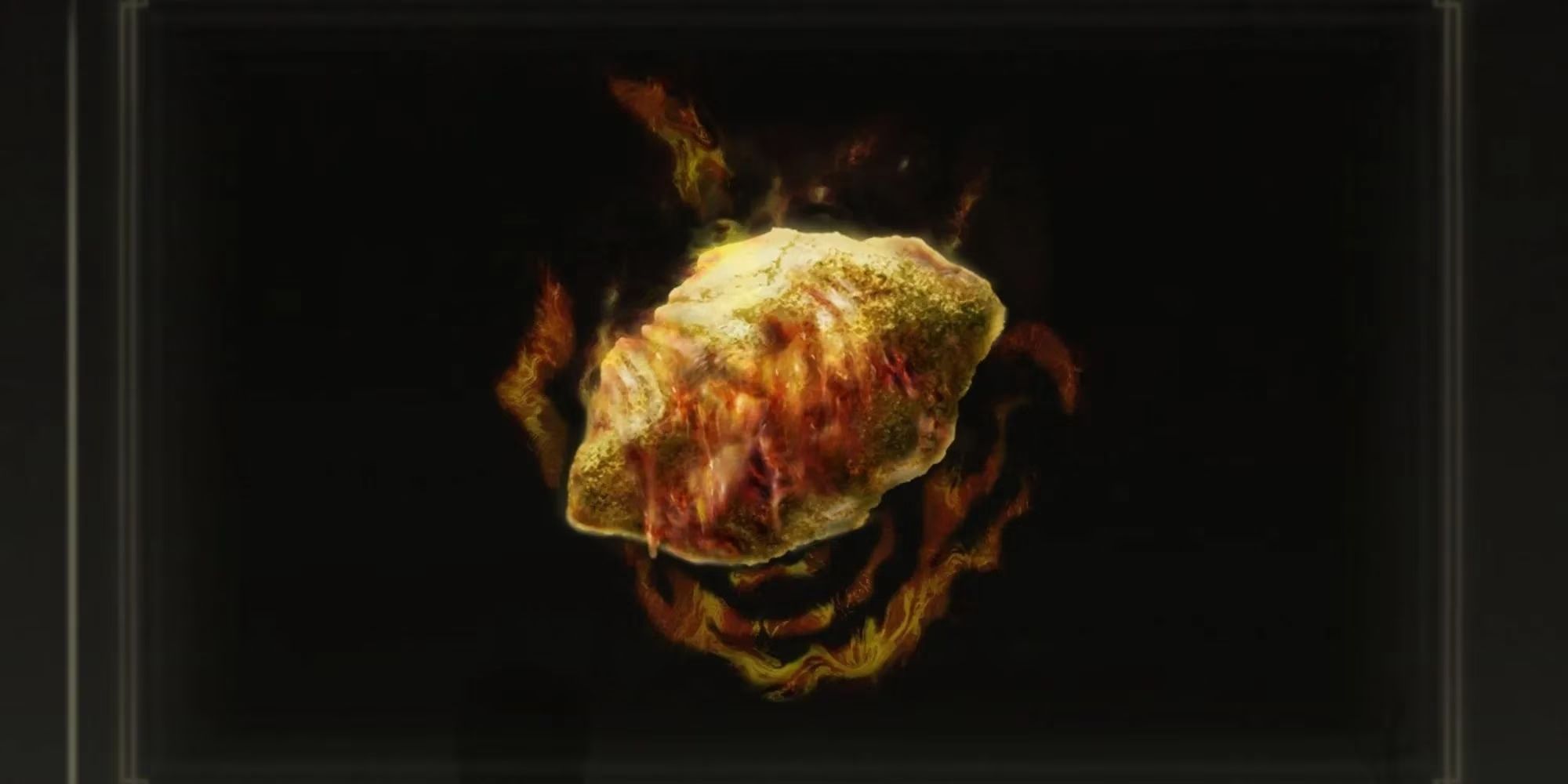
Many players overlook the humble Warming Stone—a throwable item that creates a healing zone restoring 25 HP per second for 30 seconds. The Frenzyflame Stone represents its chaotic evolution, offering enhanced benefits for those who have embraced the Three Fingers' blessing and become the Lord of Frenzied Flame.
For the chaos-touched, these stones provide 35 HP per second while simultaneously building Madness in nearby entities who haven't accepted the flame's embrace. With the Frenzied's Cookbook [2], these stones become infinitely craftable using Yellow Ember and Sanctuary Stone, creating a renewable healing source that doubles as area denial in PvP scenarios. 😈
Divine Strike: The Prayerful Warrior's Heal

Prayerful Strike stands among the most efficient alternative healing methods in Elden Ring's arsenal. This weapon skill delivers respectable damage while simultaneously restoring 30 percent of maximum HP upon successful connection—a healing rate that rivals dedicated incantations without the casting time vulnerability.
The skill's area-of-effect healing extends to nearby allies, creating powerful synergies with spirit summons, particularly the Mimic Tear. When both warrior and reflection wield Prayerful Strike, they form a mutually sustaining combat unit—each strike healing both entities in a continuous cycle of restoration. This Ash of War can be claimed mid-game by defeating an invisible Teardrop Scarab that patrols the moat surrounding Leyndell, Royal Capital.
The Ultimate Sustain Build: Vampiric Charge Combination
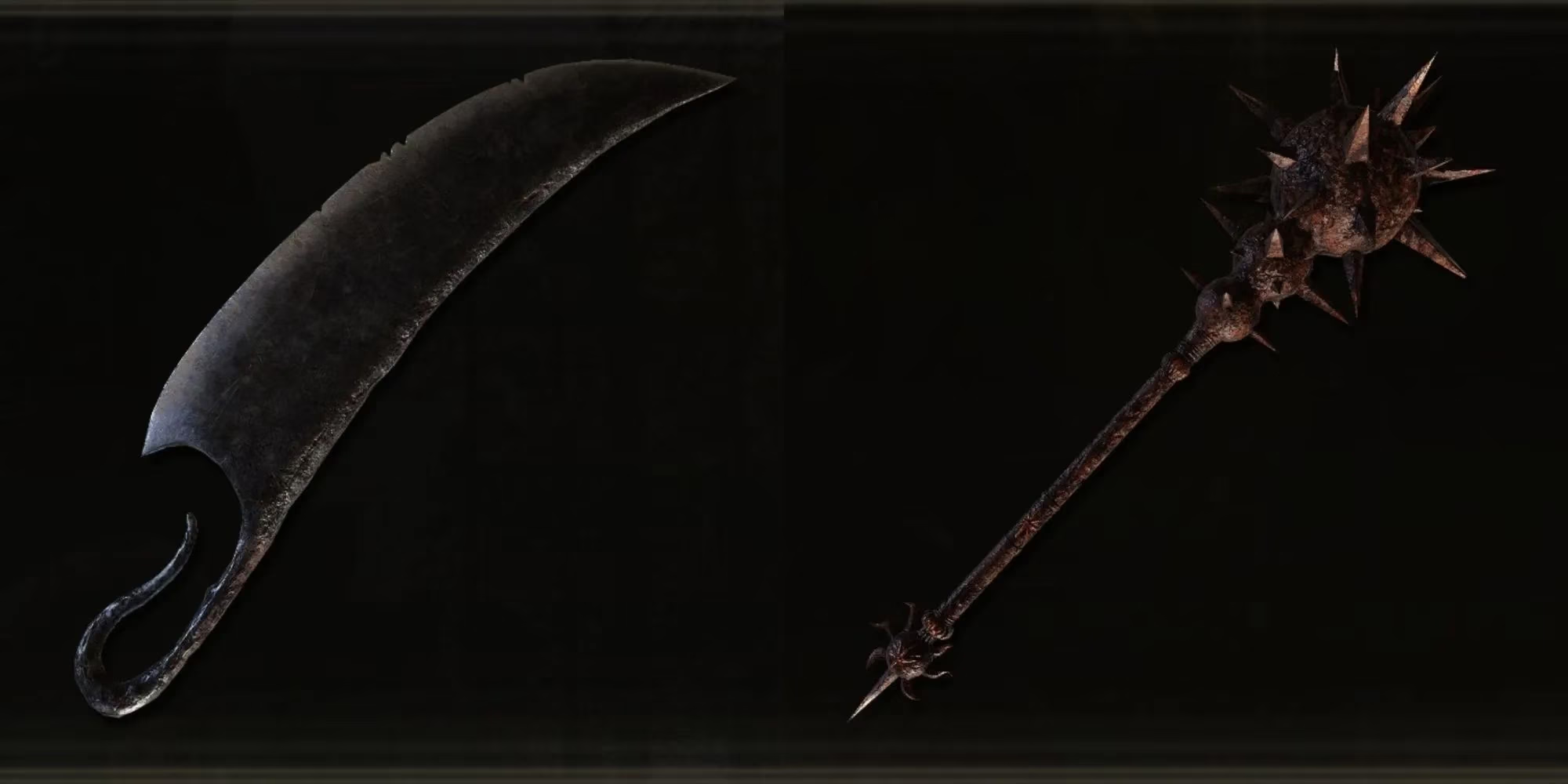
The pinnacle of alternative healing strategies combines specific weapons with a devastating charge attack. Both the Great Stars (Strength-focused) and Butchering Knife (Dexterity-oriented) share a unique property: every landed hit restores two percent of maximum HP. While this seems modest in isolation, it becomes extraordinary when paired with Prelate's Charge.
This weapon skill initiates with a flame-infused ground slam before launching into a charging assault that strikes enemies multiple times in rapid succession. Unlike most multi-hit abilities where only the first and final strikes count for status buildup, each individual impact with these vampiric weapons triggers their healing effect. The result resembles a regenerating battering ram—the more hits landed during the charge, the more health restored.
Optimal Setup:
-
Equip Great Stars or Butchering Knife
-
Apply Prelate's Charge Ash of War
-
Stack with Godskin Swaddling Cloth for additional healing
-
Consider adding Taker's Cameo for kill-based recovery
This combination transforms aggressive play into a self-sustaining combat style where offense becomes the best defense. The strategy requires patience to implement, as Prelate's Charge remains inaccessible until reaching the Mountaintops of the Giants in the game's final act.
Conclusion: The Art of Alternative Restoration 🎭
Elden Ring's healing ecosystem extends far beyond simple flask consumption, offering creative Tarnished warriors a wealth of unconventional restoration methods. These alternatives range from the straightforward (on-kill healing) to the technical (critical strike recovery) to the downright bizarre (chaos-infused healing zones). When thoughtfully combined, they create builds that regenerate health through the very act of combat—turning aggression into sustainability.
Whether you're seeking to minimize flask dependency during exploration, create a self-sustaining boss-fighting machine, or simply experiment with FromSoftware's hidden mechanical depths, these alternative healing methods offer fresh approaches to surviving the Lands Between. The key lies not in choosing a single method, but in understanding how multiple systems can stack and synergize—transforming your Tarnished from a flask-dependent wanderer into an unkillable force of nature. ⚔️✨
As you plan your next journey through the Lands Between in 2026, consider stepping away from the familiar crimson flask and embracing these creative healing strategies. After all, in a world as unforgiving as Elden Ring, survival often rewards those who think beyond conventional wisdom.