Elden Ring Dual Wield Guide and Powerstance Mechanics
Master dual wielding and powerstance in Elden Ring for devastating combos, optimal bleed builds, and unmatched combat versatility.
If you're trying to learn how to dual wield in Elden Ring, the good news is that the setup is simple. The part that actually matters is understanding powerstance, because that is what turns two separate weapons into a real combo-focused build instead of just giving you something in each hand. Whether you want early bleed procs, faster PvP pressure, or those huge stagger windows with oversized weapons, dual wielding pays off when your setup and inputs are correct.
How to Dual Wield in Elden Ring
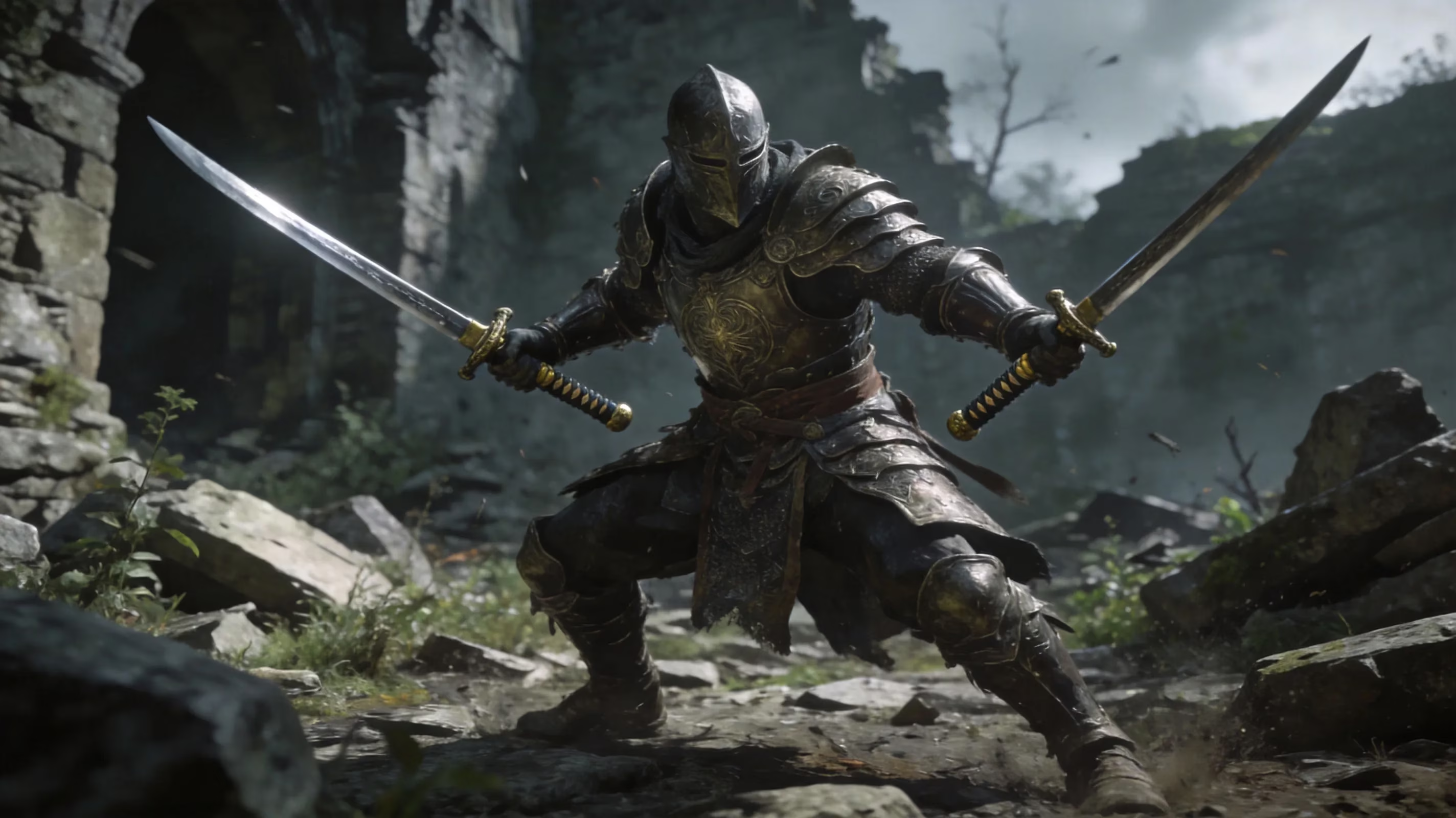
Getting started is easy. Open your equipment menu, put one weapon in your right-hand slot and another in your left-hand slot, then back out. Your Tarnished will hold both at once. From there, R1/RB attacks with the right-hand weapon, while L1/LB uses the left-hand weapon on its own. At that point, yes, you are dual wielding — but not necessarily powerstancing.
This is where the real mechanic kicks in. To powerstance, both weapons need to belong to the same weapon class. When they do, pressing L1/LB changes from a simple off-hand attack into a dedicated dual-weapon moveset, letting both weapons strike together in one animation. That is the version of dual wielding most players are actually talking about when they discuss damage, bleed buildup, and stagger pressure.
There is one easy-to-miss issue with skills. In a dual wield setup, the right-hand weapon's Ash of War usually takes priority when you press L2/LT. But if your left hand has a shield with its own skill, that shield skill takes over instead and blocks access to the right-hand Ash entirely. If you want to keep your main-hand skill active, the clean fix is to put Ash of War: No Skill on the left-hand item. A lot of otherwise solid builds get messed up by this one detail.
Elden Ring Powerstance Rules
Powerstance is based on weapon class, not how similar two weapons look. Two katanas work. Two straight swords work. A katana and a straight sword do not, even if they look close enough at a glance. Elden Ring checks the internal category, not the visual design.
You also still need to meet the stat requirements for each weapon individually. If you equip Rivers of Blood in one hand and another katana in the other, you must satisfy the Strength, Dexterity, and Arcane requirements for both. If you do not, your damage drops and your attacks feel worse, which can quietly ruin the build without being obvious at first. Equip load matters too. If your dual wield setup pushes you into a medium-heavy or heavy roll situation, losing dodge quality is a serious problem when you are not carrying a shield.
As for Shadow of the Erdtree weapons, they follow the exact same powerstance rules as the base game. DLC gear does not get special treatment here, and as of 2026, patches have not changed the core system.
Compatible Weapon Classes
The following weapon categories can powerstance when you equip two from the same class:
| Weapon Class | Powerstance Notes |
|---|---|
| Katanas | High bleed buildup; excellent Arcane/Dex scaling |
| Curved Swords | Fast combos; wide arcs for crowd control |
| Straight Swords | Balanced speed and damage; widely available |
| Spears | Long reach; useful against large enemies |
| Colossal Weapons | Extreme stagger damage; requires high Strength and Endurance |
| Fists | Fastest attack speed; exceptional stagger chains at close range |
| Great Spears | Strong poke range; trades combo speed for range coverage |
Reapers also powerstance, though their movesets can feel awkward in cramped areas. Twinblades are their own category as well, and they only powerstance with other Twinblades. They sit in a nice middle ground if you want speed with a bit more reach.
What Breaks Powerstance
A few things will shut powerstance down, and some of them are easy to overlook:
-
Mixed weapon classes: even if two weapons seem similar, they will not powerstance unless the category matches.
-
A shield in the left hand: this removes the powerstance input and gives you guard or shield skill functionality instead.
-
Wrong-hand assumptions: putting your “main” weapon in the left hand does not make it lead the setup. The right-hand weapon still controls the skill input and usually defines how the setup feels.
Best Dual Wield Weapons in Elden Ring
The best dual wield weapons in Elden Ring depend a lot on where you are in the game and what kind of build you want. Early on, accessible weapons with good base damage and natural status buildup are the safest picks. Mid-game is where bleed and frost setups really start to take off. By endgame, a lot of players shift toward heavy stagger tools and burst-focused combos.
For PvE, status is king. Hemorrhage and Frostbite tear through a huge portion of the game, including many bosses. In PvP, things get a little different. Recovery speed, pressure, and roll punishes matter more, because strong players will not just stand there and eat repeated L1 chains.
Fast Status Builds
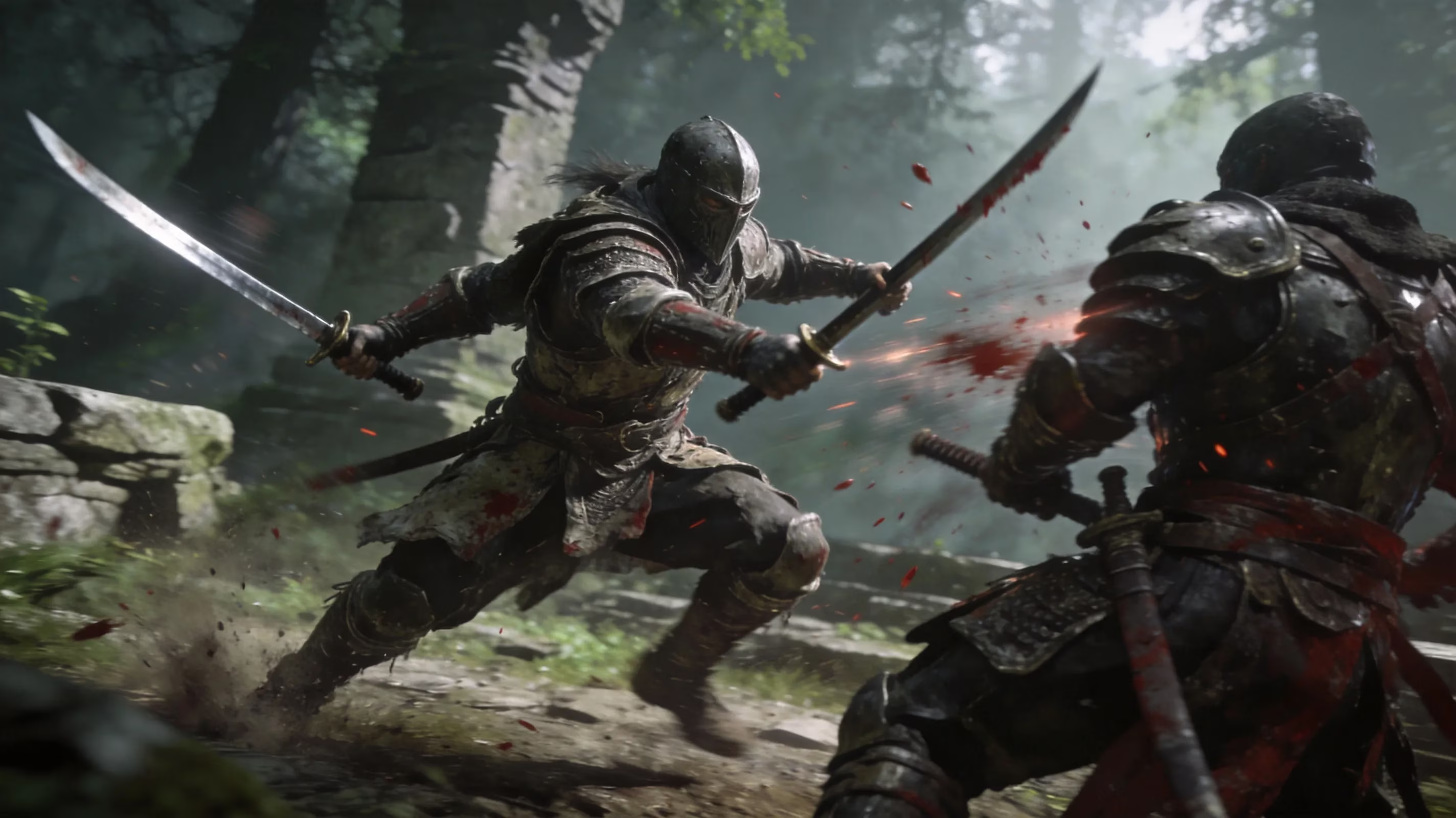
The Uchigatana pair is still one of the best beginner-friendly powerstance setups in the game. Samurai starts with one, and you can grab a second from Deathtouched Catacombs in Limgrave very early. They scale nicely with Dexterity, and later on you can shift them toward Occult for Arcane scaling. Their powerstance L1 chain hits fast enough to stack bleed from both weapons at once, which means Hemorrhage can trigger in just a few combo strings against many targets.
If you want something quicker, the Bandit’s Curved Sword pair is a great alternative. Powerstanced curved swords recover faster than katanas and are much better at aggressive roll-catching. The running L1 is especially strong for sticking to mobile targets. The downside is obvious once you use them for a bit: less reach, so your spacing has to be tighter.
The Twinblade is worth mentioning too, though more as an alternative path than a top recommendation. Two Twinblades can powerstance into a fast spinning moveset that feels great early on, but most players eventually move away from it once stronger bleed options like Rivers of Blood enter the picture.
Heavy Powerstance Builds
The Greatsword pair is the classic Strength powerstance setup. The Greatsword itself — the huge “Berserk” blade in Caelid’s Caelem Ruins — is already iconic, and running two of them gives you absurd poise damage. This setup can stagger many field bosses mid-action and bully humanoid enemies hard. The catch is stamina. Powerstance L1 swings with colossal weapons are expensive, so you really want at least 25–30 Endurance before leaning fully into this.
Then there is Great Stars, found in Altus Plateau. It powerstances with other great hammers and comes with built-in HP recovery on hit, which gets surprisingly valuable when both weapons are landing during the same combo. Running two Great Stars gives Strength builds a way to stay aggressive and recover through long fights, which helps make up for the lack of a shield.
Both of these heavy setups get way better with jump attacks. A jump L1 in powerstance brings both weapons down at once for huge poise damage, and it scales perfectly with the Claw Talisman’s +15% jump attack bonus. Honestly, jump L1 into grounded follow-up attacks is one of the nastiest melee burst sequences in the game.
Elden Ring Dual Wield Build Basics
No matter what weapon class you choose, some stat basics stay the same. Vigor 40 is the minimum you should be aiming for before mid-game areas start hitting hard. By endgame, 55–60 Vigor is way more comfortable, and for PvP it is basically mandatory. A lot of new dual wield players overinvest in damage and then wonder why every mistake gets them deleted.
Endurance is also more important than many players expect. Every powerstance L1 spends stamina on two attacks, not one, so your bar disappears fast if you are careless. Around 25 Endurance is workable, while 30–35 feels much better for most setups. Weight matters just as much. If you are trying to run dual colossal weapons, you may need extra Endurance or lighter armor just to keep a proper roll.
Offensive stat soft caps to keep in mind:
| Stat | First Soft Cap | Second Soft Cap |
|---|---|---|
| Strength | 50 | 80 |
| Dexterity | 50 | 80 |
| Arcane | 45 | 60 |
| Vigor | 40 | 60 |
For Talismans, dual wield builds usually want effects that reward repeated hits or jump pressure. The best options include:
-
Rotten Winged Sword Insignia: boosts attack power with successive hits
-
Millicent’s Prosthesis: similar stacking damage bonus
-
Claw Talisman: increases jump attack damage
-
Lord of Blood’s Exultation: gives +20% attack when blood loss happens nearby
Usually, pairing two of those with one defensive talisman gives you a really strong loadout without going too greedy.
For Ashes of War, remember that the right-hand weapon is the one that fires its skill on L2/LT during powerstance. Skills that either reposition well or pile on fast hits work especially well here. Bloodhound’s Step helps with mobility, while Corpse Piler on Rivers of Blood fits naturally into bleed-focused pressure. If you infuse both weapons with Blood, you get more bleed buildup and better Arcane synergy at the same time.
And yes, weapon greases still matter. Even late in the game, adding Blood Grease to one weapon in a non-bleed build can give you useful status pressure. The Drawstring versions from Shadow of the Erdtree are especially nice if you want better flat damage without changing the whole build.
How to Use Dual Wield in Combat
The jump L1 is the core opener for almost every powerstance build. From neutral, or while hopping over an incoming attack, it brings both weapons down in one heavy overhead strike. It deals strong poise damage on its own, and with Claw Talisman it gets even better. Against bosses, landing a jump L1 and following with one or two grounded L1s will often push you into a stagger or at least get you very close. That sequence is the bread-and-butter route for a reason.
For roll-catching, timing matters more than raw aggression. Powerstance L1 attacks — especially on curved swords and katanas — have active frames and hitboxes that are better than they first look. Running L1 is particularly good at catching opponents who roll toward you or sideways. In PvP, this is one of your main punish tools. In PvE, the same idea works against enemies with predictable dodge or retreat patterns.
The biggest skill check, though, is stamina discipline. Dual wielding feels amazing right up until you empty your bar mid-combo and cannot dodge the counterattack. That happens a lot to newer players. Good dual wield play is not just “press L1 more.” It is knowing when to stop early, back off, let stamina recover, and then go back in before the enemy resets.
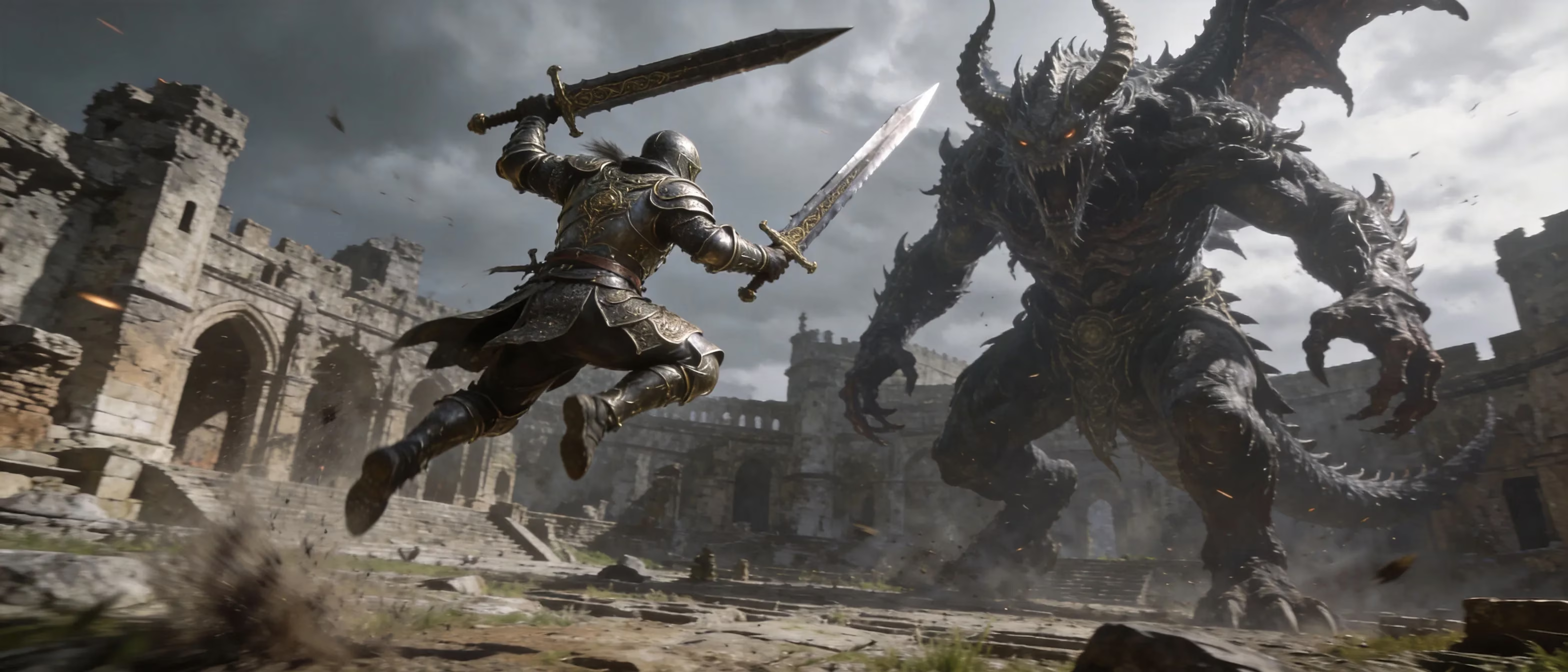
Posture damage routing also changes depending on what you are fighting. Human-sized bosses and many field enemies can be broken by chaining grounded L1 combos cleanly. Bigger targets — dragons, giants, and several remembrance bosses — usually need repeated jump L1s to really pressure their poise. Figuring out which route works on each enemy is where dual wield combat starts to feel way more deliberate and way more rewarding.
Elden Ring Dual Wield FAQ
Can two different weapons powerstance together?
Yes, but only if they share the same weapon category. A katana and a straight sword will not powerstance, even though both are one-handed blades. Category is what matters.
What is the best starting class for a dual wield build?
For most players, Samurai is the easiest starting point. You begin with the Uchigatana, and its stat spread naturally supports Dexterity and Arcane paths. If you are planning a Strength-heavy setup instead, Vagabond or Hero makes more sense.
Is dual wielding worth it over sword-and-shield?
In PvE, usually yes. You get better damage, faster boss kills, and a much more aggressive combat flow. The trade-off is obvious: no real guard safety net, so your dodges need to be on point. In PvP, it is a closer call because predictable powerstance strings can get punished.
Can players block effectively while dual wielding?
Not really in a standard powerstance setup, since both hands are occupied by weapons. If you want to block, you can swap a small shield or buckler into the left hand, but that disables the powerstance moveset. The Elden Ring Nightreign update 1.03.2 adjusted certain Raider attack-speed values, but base game dual wield blocking behavior in the main title is unchanged.
Conclusion
For most players learning how to dual wield in Elden Ring, the safest all-around setup is still the Uchigatana pair. It comes online early, has low requirements, and stays effective through the main game and most of Shadow of the Erdtree with the right stat investment. If you are going all-in on Arcane, the strongest bleed route is still Rivers of Blood in the right hand with an Occult Uchigatana in the left. Strength players, meanwhile, will get the most value from a Greatsword pair or Great Stars if they want to bully bosses with stagger pressure.
If your build feels off — too much Faith, wasted Mind, not enough Endurance to support your weapons — Rennala at Raya Lucaria lets you respec through Rebirth for one Larval Tear. There are about 18 Larval Tears per playthrough, so you have plenty of room to fix mistakes and test new setups. Meet the stat requirements, commit to one weapon class, get comfortable with jump L1 openers, and manage your stamina properly. Once that clicks, dual wielding starts to feel incredibly natural. Happy hunting, Tarnished.