Elden Ring Nightreign: How The Executor's Beast Transformation Signals FromSoft's Bold Evolution
Elden Ring Nightreign redefines FromSoftware's masterpiece with bold transformations, including the groundbreaking Beast Transformation mechanic that elevates gameplay to new heights.
The gaming community watches with bated breath as FromSoftware prepares to unleash Elden Ring Nightreign in 2025. What started as whispers of a multiplayer expansion has blossomed into something far more ambitious—a game that doesn't merely iterate on Elden Ring's foundation but reimagines it entirely. The recent character trailer featuring The Executor has sent ripples through the community, showcasing how FromSoftware is pushing boundaries in ways few anticipated.
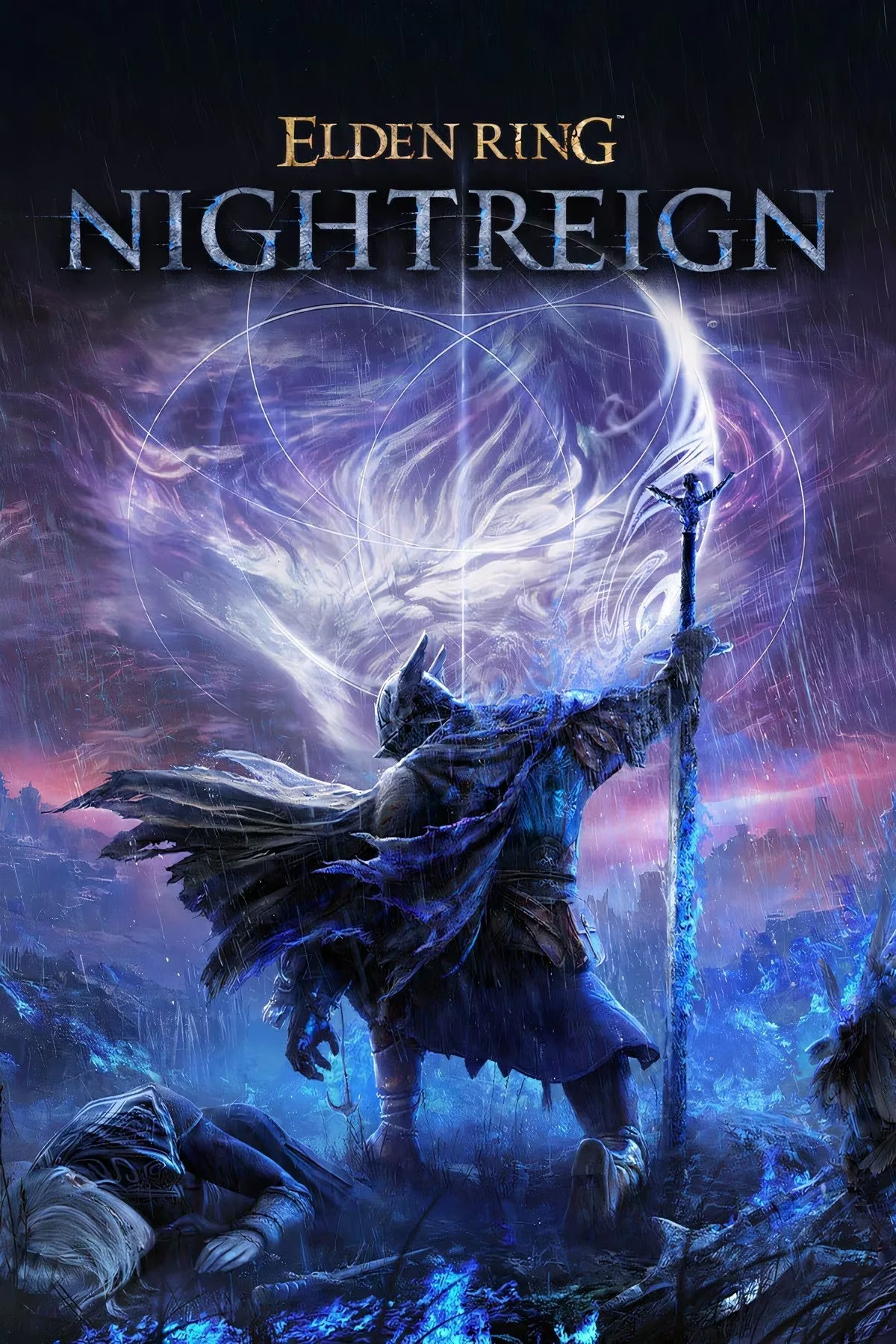
"A condemned warrior who wields a cursed katana blade" reads The Executor's official description—understated in typical FromSoft fashion. Yet what follows in the gameplay reveal is anything but understated. The Executor possesses an ability that transforms the very notion of character classes in the Souls genre: the power to metamorphose completely into a monstrous, werewolf-like beast.
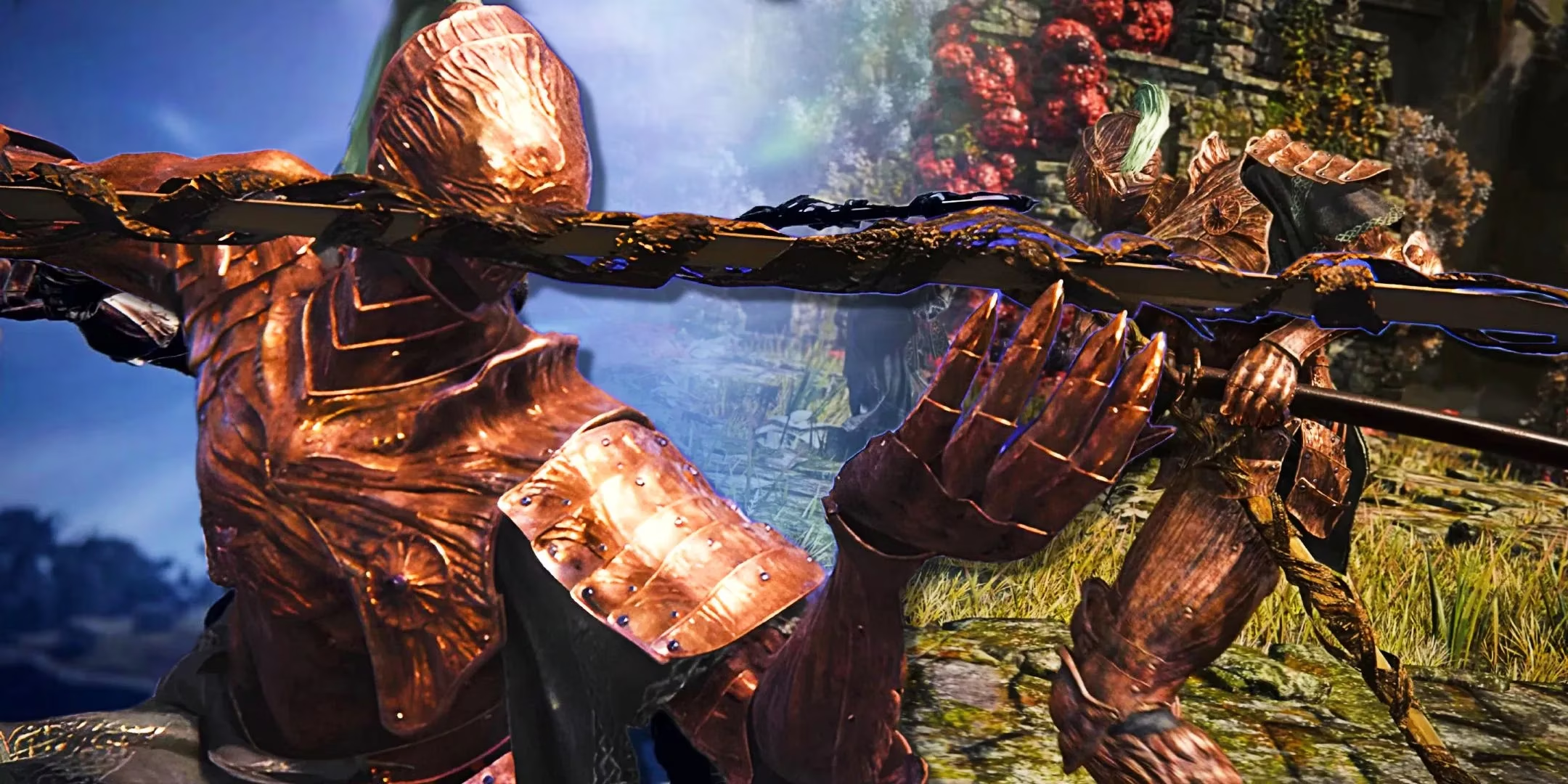
The Ultimate Art: Beast Transformation
The Executor's transformation isn't simply cosmetic—it's a fundamental gameplay mechanic called an Ultimate Art. This high-powered ability, which can only be activated after meeting specific conditions in battle, allows players to temporarily assume the form of a feral beast. In this state, The Executor attacks with savage claws before summoning a spectral, curved horn to deliver devastating blows.
"It's like watching a butterfly emerge from its chrysalis, except the butterfly is actually a nightmare with teeth and claws," remarked one beta tester during a recent preview event.
This mechanic represents a dramatic evolution of the Aspects of the Crucible spells from the original Elden Ring. Where those bestial incantations allowed players to manifest single animal parts for specific attacks, Nightreign takes the concept to its logical extreme—complete transformation.
How Nightreign Builds on Elden Ring's Foundation
FromSoftware could have easily transported Elden Ring's existing classes into a cooperative framework with minimal adjustments. Instead, they've chosen the path less traveled—reimagining familiar concepts with bold new twists.
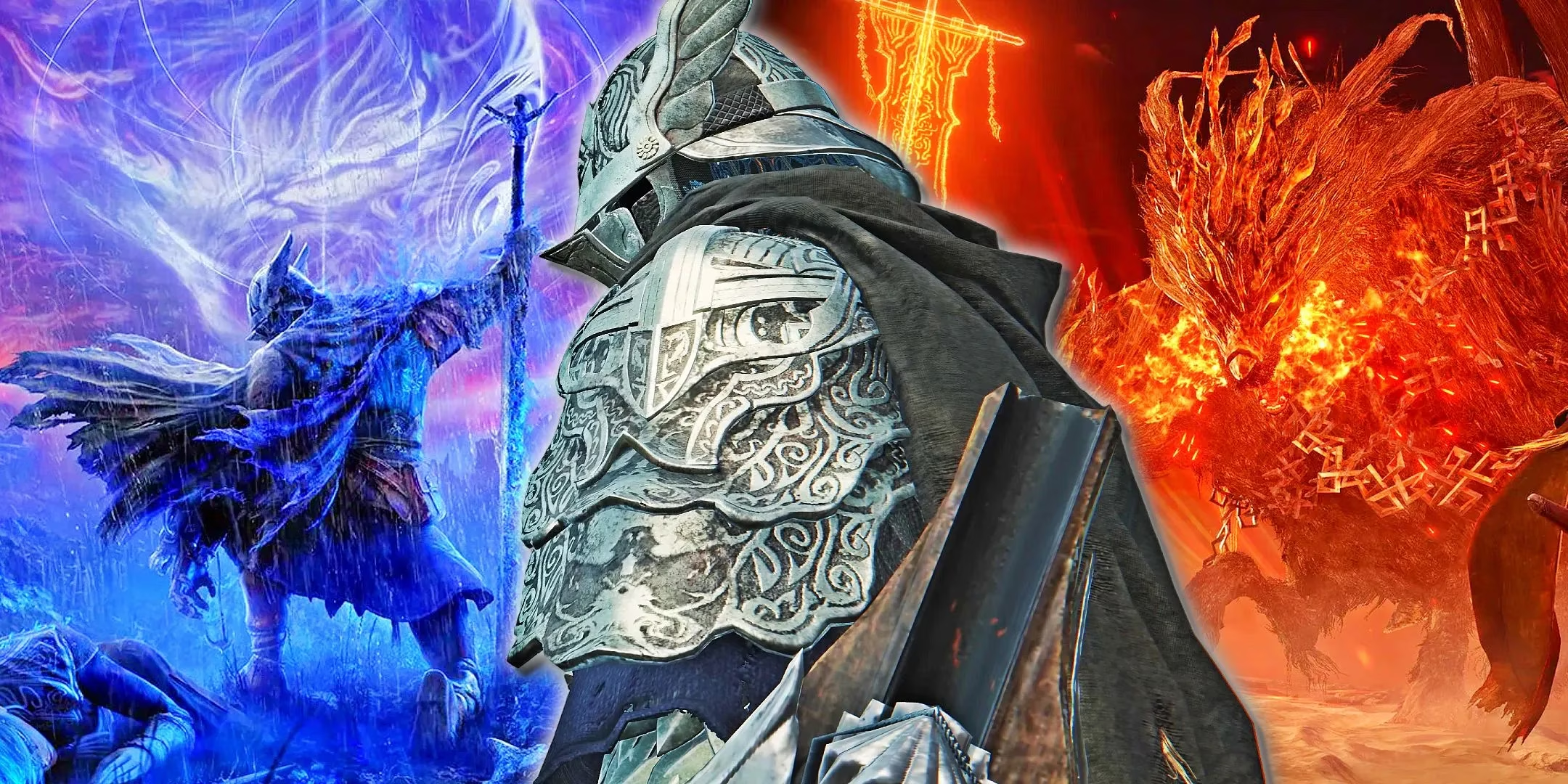
"What we're seeing isn't just an expansion—it's more like watching a seed grow into something that bears only passing resemblance to its parent," says gaming analyst Maya Chen. "Nightreign is to Elden Ring what jazz is to classical music—recognizable roots but with wild improvisation."
This philosophy extends across all of Nightreign's character classes. Each Nightfarer takes a familiar Elden Ring archetype and transforms it into something simultaneously recognizable and alien:
-
The Revenant: Elevates Spirit Ash summoning from a support mechanic to a central gameplay pillar
-
The Duchess: Reimagines stealth gameplay with unprecedented depth and versatility
-
The Iron Eye: Transforms archery from Elden Ring's oft-criticized "hard mode" into a compelling, dynamic playstyle
-
The Raider: Takes the concept of wielding oversized weapons and pushes it to spectacular new heights
People Also Ask
Q: Will Elden Ring Nightreign replace the original Elden Ring?
A: No, Nightreign is designed as a standalone experience that complements rather than replaces the original. It focuses on cooperative play with specialized character classes, while the original remains the definitive single-player experience.
Q: Can you switch between human and beast form at will as The Executor?
A: No, the beast transformation is an Ultimate Art that requires specific conditions to activate and has limited duration. It's a powerful but temporary state rather than a toggle.
Q: Will other Nightfarers have transformation abilities similar to The Executor?
A: While each Nightfarer has their own unique Ultimate Art, The Executor's complete physical transformation appears to be unique among the revealed characters so far.
FromSoft's Sequel Philosophy
FromSoftware's approach to sequels has always been more evolutionary than iterative. Like a river carving new paths through familiar terrain, they tend to take core concepts from previous games and channel them in unexpected directions.
Bloodborne wasn't simply "Dark Souls with guns"—it was a fundamental reimagining of combat philosophy. Sekiro wasn't "Bloodborne with ninjas"—it was a complete rethinking of player movement and engagement. Now, Nightreign isn't merely "Elden Ring with friends"—it's shaping up to be a bold reinterpretation of how character builds and cooperative play can function in FromSoft's distinctive world.
"FromSoftware treats sequels like master chefs treat ingredients," observes veteran game critic Jordan Lee. "They don't just reheat yesterday's meal—they transform familiar flavors into something you've never tasted before."
The transformation ability of The Executor exemplifies this philosophy perfectly. It takes a concept that existed in embryonic form in Elden Ring and develops it into something that fundamentally changes how players will approach combat encounters.
The Broader Implications
What makes Nightreign particularly fascinating is how it serves as both continuation and commentary on its predecessor. The beast transformation mechanic doesn't just expand on Elden Ring's Crucible spells—it subtly references the thematic elements of transformation and identity that ran through the original game's narrative.
In Elden Ring, players encountered numerous characters transformed by cosmic forces, from Godrick grafting limbs to Malenia's Scarlet Rot metamorphosis. The Executor's ability to willfully transform seems to be FromSoft's way of putting that power directly in players' hands, like giving a reader the ability to rewrite a novel's most pivotal scenes.
As we approach Nightreign's May 30, 2025 release date, questions linger about how these transformative mechanics will balance in multiplayer scenarios. Will The Executor's beast form dominate the meta? How will other Nightfarers counter such raw power? Will transformation abilities extend to enemies and bosses as well?
Rather than offering definitive answers, perhaps we should embrace the uncertainty. After all, in a FromSoftware game, the journey of discovery is often more rewarding than the destination. Like ancient astronomers mapping constellations in the night sky, we piece together fragments of information, forming theories that may prove brilliant or naive once the full picture emerges.
As we stand on the threshold of this new chapter in the Elden Ring saga, one thing seems certain: FromSoftware isn't content to simply add multiplayer to a successful formula. They're transforming the formula itself, much like The Executor transforms from human to beast—completely, dramatically, and with consequences that will reshape our understanding of what an Elden Ring experience can be.
Expert commentary is drawn from Giant Bomb, a leading source for game reviews and community-driven insights. Giant Bomb's coverage of FromSoftware titles often emphasizes the studio's innovative approach to class mechanics and transformation abilities, providing context for how features like The Executor's beast form in Elden Ring Nightreign could redefine cooperative gameplay and player strategy.