FromSoftware's Final Act Fumbles: A Player's Lament
FromSoftware's masterpieces stumble in their final hours, with rushed zones like Lost Izalith and the Mountaintops of the Giants.
I've spent countless hours dying in Lordran and the Lands Between, and I'll be the first to admit that FromSoftware has redefined what it means to play a challenging action RPG. The intricate combat, the atmospheric world design, and the cryptic storytelling have left an indelible mark on the industry. Yet, after all this time, I can't shake a persistent disappointment: their games consistently fall apart in the final hours. It's a baffling pattern, and one I've experienced first-hand across multiple playthroughs.
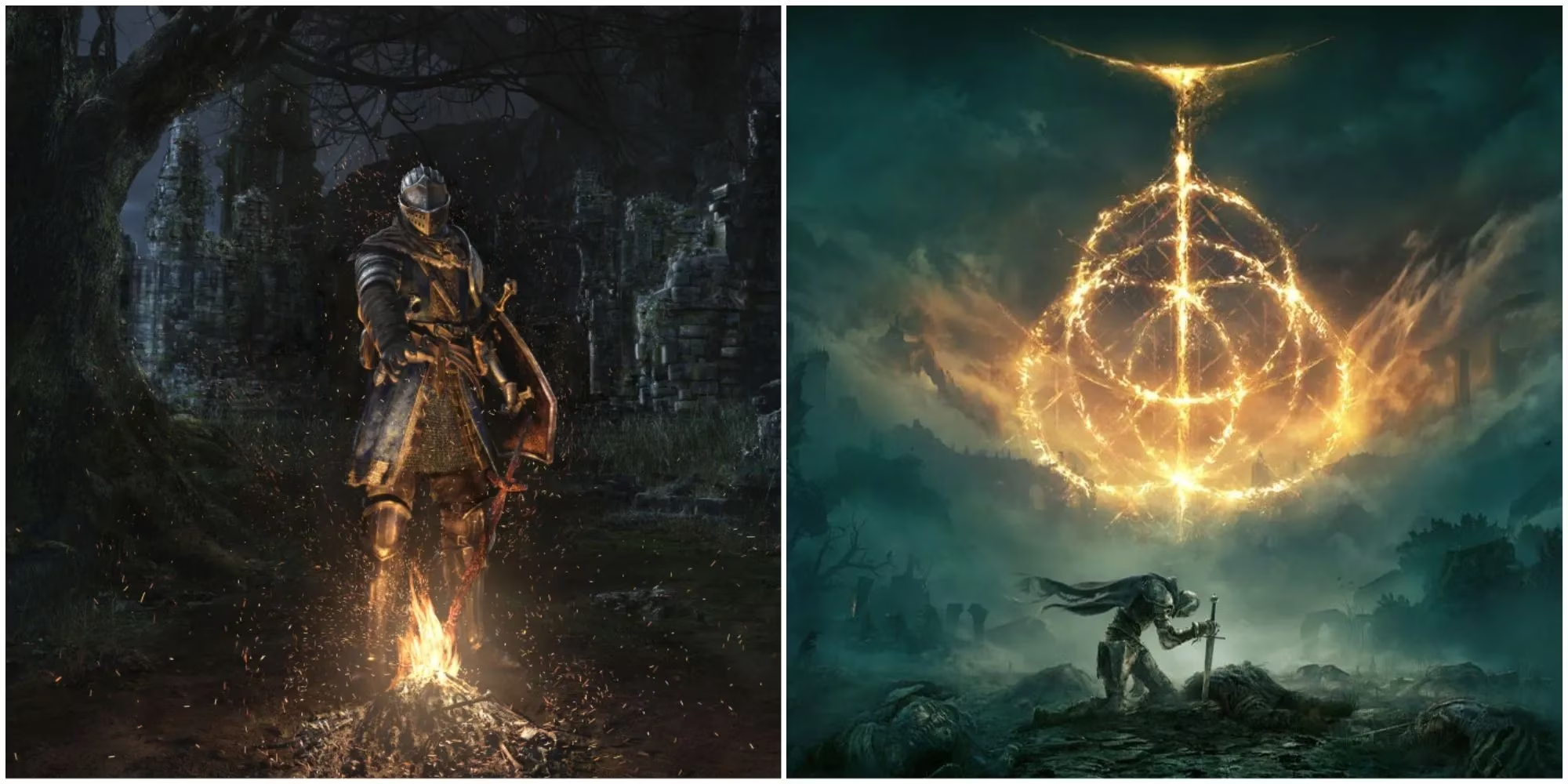
I remember my first journey through Dark Souls back in 2011. Everything from the Undead Burg to the depths of Sen’s Fortress felt meticulously crafted. Even the infamous Blighttown, for all its technical issues, offered a sense of oppressive verticality that made reaching Quelaag's Domain feel like a true victory. But something shifted once I descended into the Demon Ruins. The atmosphere drained away. The brilliant sense of interconnectedness that had defined the early game was replaced by a linear slog through a burnt-orange wasteland. The boss that greeted me—Ceaseless Discharge—was a pitiful blob of orange goo that barely posed a threat. Unlike the graceful tragedy of Great Wolf Sif or the architectural terror of the Bell Gargoyles, this fight was a mere formality.
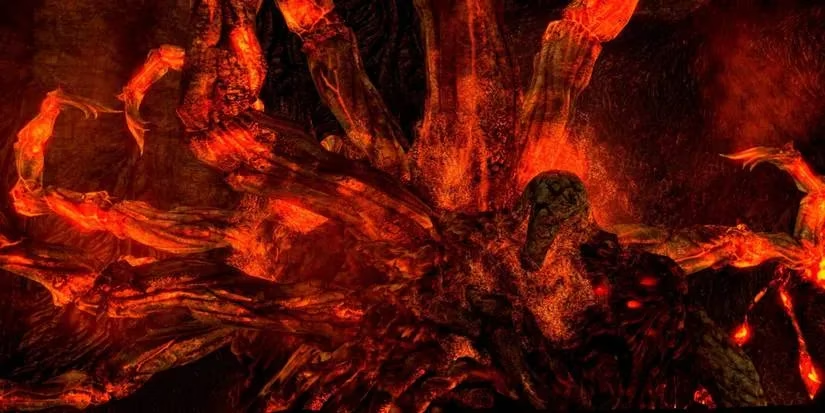
Things only got worse. The Demon Ruins began to feel like a recycling bin for earlier content. I fought Capra Demons repurposed as standard enemies, and then came face to face with the Demon Firesage—a blatant reskin of the very first boss I'd ever encountered in the Asylum. The Centipede Demon was even more aggravating, with its arena designed not as a strategic challenge but as a tedious lava-locked cage match, offering barely enough solid ground to dodge. By the time I reached Lost Izalith, the game had become a surreal mess. I found myself wading across an endless lava lake, surrounded by massive, dinosaur-like creatures that only mattered if I accidentally provoked them into a bizarre attack animation. The whole area felt unfinished, like a collection of placeholder assets hastily welded together. And then there was the Bed of Chaos—a boss fight that abandoned combat entirely in favor of a clumsy platforming puzzle over bottomless pits. It remains one of the worst encounters in the entire Soulsborne library, a stain on an otherwise masterpiece.
I'd hoped that Elden Ring, a game of unprecedented scale and freedom, would break this curse. For over 80 hours, it did. I roamed the Lands Between, uncovering secrets, toppling demigods, and marveling at the beauty of locations like Liurnia of the Lakes and the subterranean Siofra River. The capital city of Leyndell felt like a natural climax—a glorious, golden fortress that echoed with the music of a crumbling order. Turning its streets into a battleground was exhilarating. It felt like the end. But it wasn't.
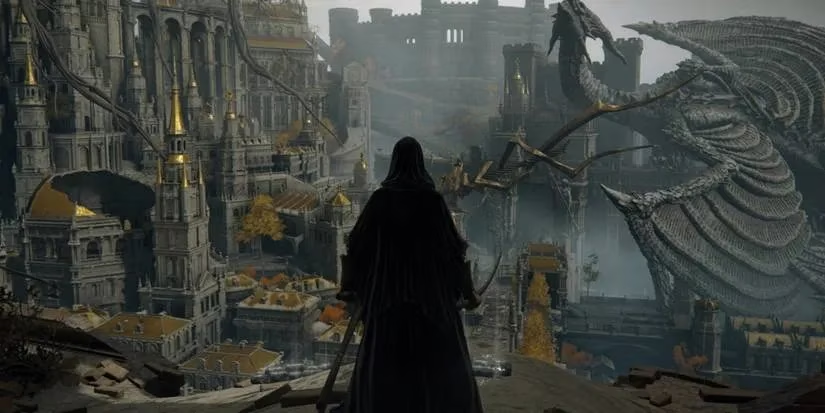
After Leyndell, the game took a nosedive. The Forbidden Lands and the Consecrated Snowfields were desolate, featureless expanses that reminded me of the worst optional areas in Dark Souls 2. Visibility in the Consecrated Snowfields was nearly zero thanks to a blinding blizzard, and I found myself confronting yet another Night’s Cavalry boss—my ninth encounter with that same mounted enemy. The experience felt like an unnecessary, padded roadblock, forcing me through retread content just to reach the finale. Crumbling Farum Azula looked spectacular with its swirling vortex, but navigating it was a mechanical low point. The dragon fights were plagued by camera issues, and the platforming sections shone a harsh light on FromSoftware’s enduring weakness with jumping mechanics—something I thought they'd improved since Sekiro, but clearly hadn't applied here.
The Godskin Duo fight nearly broke me. I had already beaten both the Godskin Apostle and the Godskin Noble several times in separate locations. Now they were thrown into a cramped room together, sharing a massive health pool and able to respawn one another. It felt like a lazy, artificial way to ramp up difficulty. The most effective strategy was to put one to sleep and wail on the other, but that turned the duo boss into a single-target snoozefest and completely undermined the intended design. After that, the game threw me into a relentless gauntlet: Maliketh the Black Blade, Sir Gideon Ofnir, Hoarah Loux, and finally Radagon of the Golden Order—followed immediately by the Elden Beast. It was a punishing boss rush that abandoned all the open-world freedom the preceding 100 hours had built. The pacing, which had felt so organic, was now crushed under a pile of consecutive, exhausting encounters.
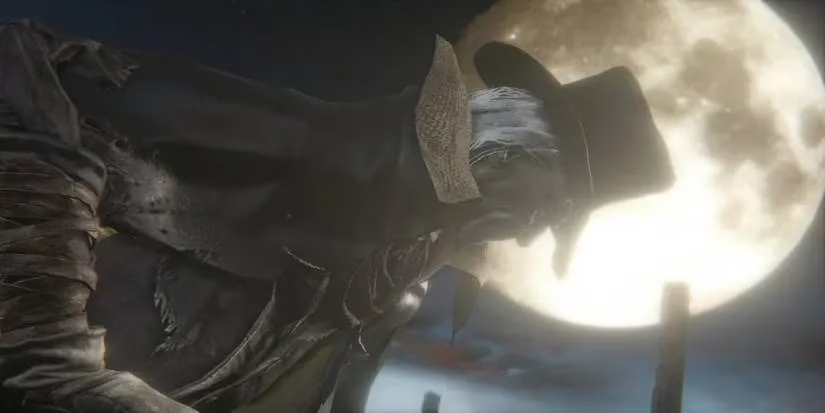
I can't help but contrast both of these games with Bloodborne. That game, from start to finish, is a marvel of pacing. You begin in the gothic streets of Yharnam and are drawn deeper and deeper into a cosmic nightmare, with the world itself transforming after the revelation at Byrgenwerth. The road to the finale, whether it’s the tragic duel with Gehrman under the pale moon or the hidden confrontation with the Moon Presence, feels inevitable. There is no wasted area, no sudden spike in difficulty that feels cheap. Every part of Bloodborne contributes to the whole, making it one of FromSoftware's tightest works.
The fact that these final-act stumbles exist in games as recent as 2022's Elden Ring suggests an uncomfortable truth: FromSoftware, for all their talent, seems to run out of steam or resources toward the end of development. Maybe it's a matter of biting off more than they can chew. In Dark Souls, the late-game areas were clearly incomplete. In Elden Ring, the sudden difficulty spike and recycled content feel like they stem from an overstretched scope—an attempt to maintain a massive world that the endgame couldn't effectively fill. As a player, I'm left with a bitter aftertaste, remembering the jarring shift from the rich exploration of the Lands Between to the sterile, linear grind of the Mountaintops of the Giants and beyond. These games are still undeniably masterpieces, but they all carry the same wound: a beginning and middle that rank among the best in gaming, marred by an ending that feels at best rushed and at worst forgettable. As I look ahead to whatever FromSoftware creates next, I hold out hope that they'll finally conquer this particular demon and deliver an experience that stays brilliant right up to the final credits. Until then, I'll always know that the true final boss of any Miyazaki game might just be the development deadline itself.