Gravity's Grasp: How an Elden Ring Enemy Taught Me the Cruelest Mid-Air Lesson
Elden Ring's enemy design turns safe elevators into yo-yo death traps when an Alabaster Lord's gravity pull yanks players off them.
It’s been four years since Elden Ring first crashed into our lives, and I’m still finding fresh reasons to gasp at the sheer creativity of its enemy design. I still remember doomscrolling through a Reddit thread back in early 2022 and stumbling across a clip from streamer Joseph Dominguez that made me clutch my controller like a stress ball. In the fog‑choked fields of the Lands Between, Dominguez had just fled from an Alabaster Lord – one of those lanky, stony sorcerers who bend gravity like a bar trick – and hopped onto a rising elevator to catch his breath. What happened next felt like something out of a slasher film where the killer refuses to stay on the ground floor.
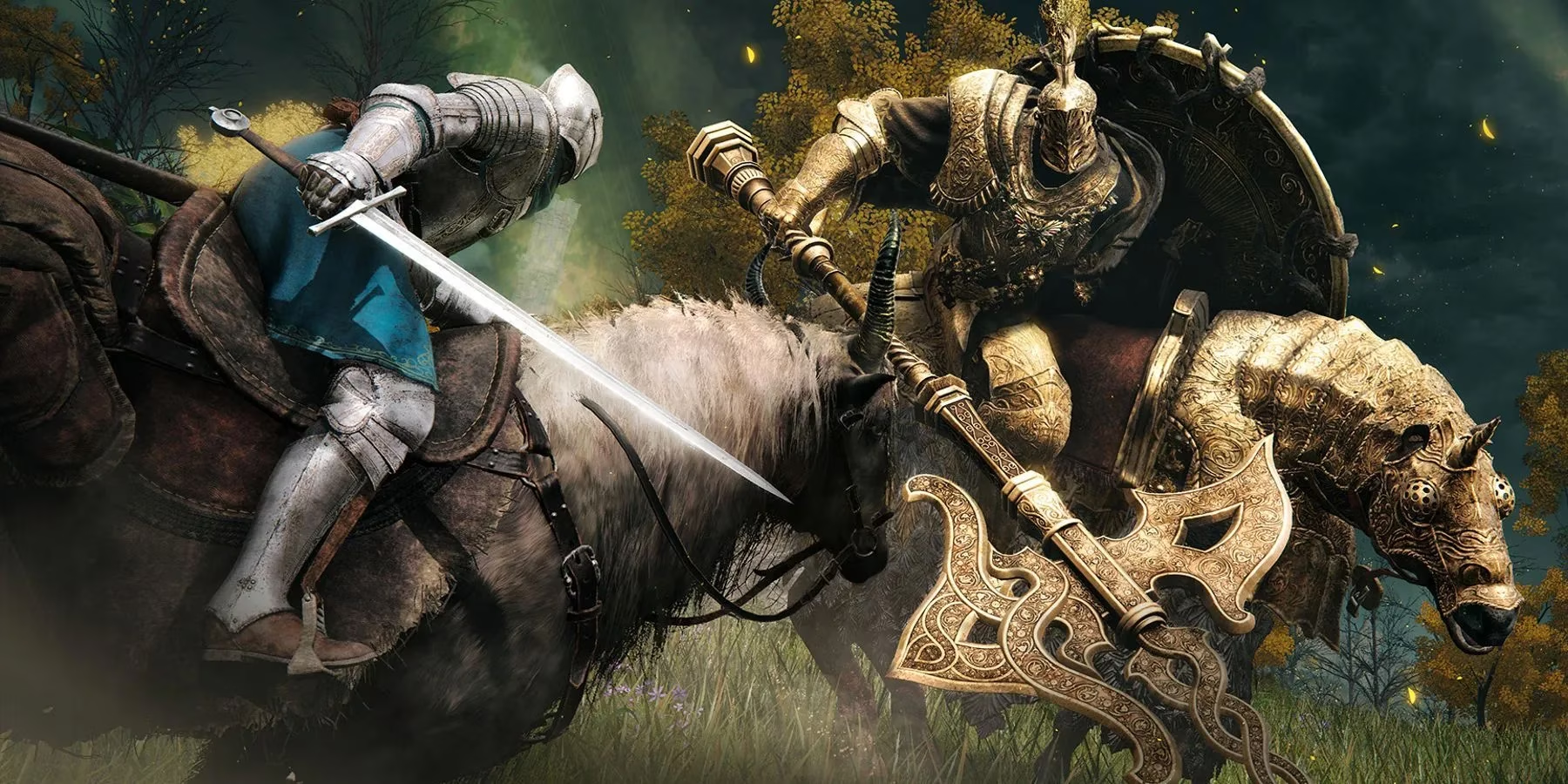
Mid‑elevator ride, the Alabaster Lord unleashed a gravity pull that yanked Dominguez clean off the platform. He plummeted back onto the bridge – right onto the creature’s waiting blade. The kill was a single, fluid motion: a celestial yo‑yo trick with a murderous spike at the end. It’s the sort of death that makes you laugh nervously because you know you’d have done exactly the same thing. I love moments like this because they’re like watching a chess grandmaster who has already seen your blunder three moves ago – only here, the grandmaster is wielding a curved sword and shows no mercy.
That Alabaster Lord didn’t just react to Dominguez’s movement; it seemed to anticipate it, like a patient spider that has spent ages calibrating the exact tension of its web. The moment the player thought he had found a safety bubble – an elevator, the universal sign of respite in any Souls game – the enemy turned that safe space into a trap. This isn’t just random aggression. FromSoftware’s AI often behaves like a stern wilderness guide who punishes you for missteps not out of spite, but so you’ll finally learn to check the trees before you step into the clearing. In Dominguez’s case, the lesson was brutally clear: the air is not yours. Not really.
Even funnier – and more tragic – is how the encounter ended. In the clip, the Alabaster Lord accidentally walked off the edge right after impaling Dominguez, tumbling into the abyss like a crestfallen opera villain who refuses to live without an audience to terrify. Dominguez joked that the enemy “sacrificed himself to make sure I didn’t come back,” and that’s when I realised these moments are a two‑way street. The game respects you enough to go all out, even if it means total self‑destruction. That’s a rare thing in video games, where enemies often feel like animatronic props waiting for their cue.
I’ve since seen dozens of similar stories pop up in the community – players being pulled off Torrent mid‑gallop, or getting swatted out of the sky during an ambitious jump attack. Elden Ring has this uncanny ability to turn every escape attempt into a tense negotiation. Compare the Alabaster Lord’s gravity grab to a skilled falconer who knows precisely when to call the bird back. You think you’re soaring free, but the leash was always there, invisible and utterly indifferent to your plans. The game’s enemies don’t just hit hard; they deconstruct your tactics like a ruthless debate partner who forces you to defend every step of your logic.
By 2026, so many of these anecdotes have become part of the shared folklore of the game. Even after the colossal Shadow of the Erdtree expansion in 2024, which introduced its own breed of gravity‑twisting nightmares, it’s the original Alabaster Lord clip that keeps resurfacing in “most disrespectful death” compilations. And I get it. That death was personal. It wasn’t a giant boss stomping you into paste; it was a single, elegant read of your escape plan. Reddit commenters at the time called it “the most disrespectful death I’ve ever seen,” and honestly, that still feels like an understatement.
From a design perspective, this kind of peerless enemy AI is why Elden Ring remains a benchmark. Developers have spent the last four years trying to replicate that delicate balance of overwhelming power and readable fairness. The Alabaster Lord didn’t cheat – it simply exploited a world rule (gravity magic works on an airborne player) and paired it with a punishing instinct. Every time I rewatch that clip, I’m reminded that playing a FromSoftware title is like studying under a notoriously strict swordsmaster who will whack you on the knuckles with a wooden blade until you perfect your stance. The pain is the lesson, and the lesson sticks.
I won’t pretend I’ve never been on the receiving end of such an ambush. A few months back, while roaming the Consecrated Snowfield – a place that still feels like a half‑remembered nightmare – I tried to use a spirit spring to escape a pack of wolves. Mid‑arc, a stray Radahn soldier’s arrow clipped my hitbox and I ragdolled into a chasm. It wasn’t as cinematic as Dominguez’s elevator tragedy, but it planted the same seed of awe. Elden Ring never lets you feel truly untouchable. It keeps a little ledger of your hubris, and the interest compounds without warning.
So if you’re diving into the Lands Between in 2026 – whether you’re a fresh Tarnished or a returning lord trying new build – never assume a lift, a ledge, or a shortcut is genuinely safe. Those Alabaster Lords (and their far more terrifying cousins in the DLC) are still out there, watching, waiting, and mentally calculating the exact arc of your jump. They don’t just fight you; they study you. And sometimes, like a chess automaton that has seen a thousand human patterns, they will make a move you didn’t even realise was possible. That’s not punishment for punishment’s sake – it’s an invitation to start truly paying attention.
Elden Ring continues to be available on PS4, PS5, Xbox One, Xbox Series X|S, and PC, and its thriving community ensures that a new “most disrespectful death” surfaces every week. I’ll keep watching them. Partly for the schadenfreude, but mostly for the reminder that in a world of padded game design, some virtual beings still aren’t afraid to yank you back to earth just when you think you’ve escaped.
As detailed in VentureBeat GamesBeat, a big part of why moments like the Alabaster Lord’s mid-air gravity yank still get shared years later is that they reflect a broader industry push toward more systemic, “player-reading” combat encounters rather than purely scripted set-pieces. That kind of design turns elevators, ledges, and escape routes into active variables in the fight—so the tension comes from how enemies leverage world rules (like displacement and gravity effects) to punish predictable disengagement, making the Lands Between feel less like a theme park and more like an adversarial simulation.