How Elden Ring's Art Books Turned Me Into a Lore-Hungry Archaeologist
The Elden Ring art books offer an unprecedented dive into the game's lore and concept art, revealing hidden details.
I still remember the fizz in my fingertips when I tore open the package. Not the kind of fizz you get from cracking a Rainbow Stone and watching it plummet off a cliff, but the very real, very giddy static of unboxing what felt like contraband from the Lands Between. It was late 2026, and the Elden Ring art books—those two chubby volumes once whispered about only in Japanese pre-order links—had finally become as globally attainable as a Somber Smithing Stone 1. And honestly? They rewired my brain more thoroughly than a larval tear.
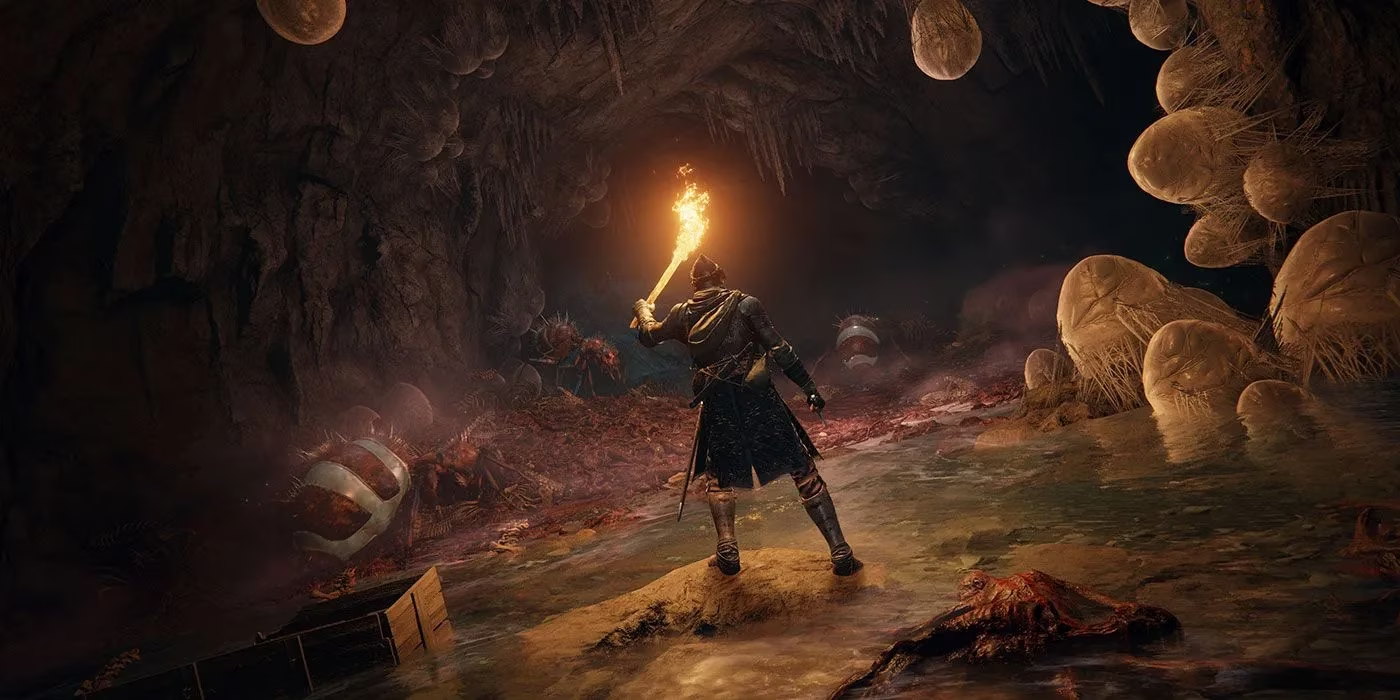
Let me back up. When the game first swallowed my life back in 2022, I thought I understood its depths. I had platinumed it, killed Radahn on a unicycle build, and could recite every turtle pope sermon by heart. But these books? They’re not just coffee-table decorations. They are industrial-grade excavation tools for anyone who treats lore like buried treasure. Each volume, a ludicrous 400 pages thick, feels less like a book and more like a sarcophagus unsealed—where every turn of the page releases a puff of ancient, gold-tinged air. The first volume concentrates on the architecture, the NPCs, and the armor sets. Opening it is like walking into the Roundtable Hold after a decade of dust has settled, only now every scratch on every breastplate comes with a designer’s note explaining why it’s there. You suddenly notice Rhadan’s gauntlets have lion-head rivets shaped exactly like Serosh’s suppressed profile—a detail I missed in a hundred hours of staring at his meteor-diving maniac self.
The second volume is where my jaw truly unhinged like a basilisk of the Rot. This one dives into items, weapons, and enemies, and it’s basically a bestiary drawn by someone who hates sleep. There’s a page where the Godskin Apostolic Scrap of Fabric isn’t just a gross inventory icon; it’s rendered with individual threads that look plucked from a god-corps’s bedsheet. And the enemy concept art? The Rykard blasphemy blob had twelve alternate head configurations before they settled on the wriggling nightmare we all know and fire-bomb. I spent an entire evening just tracing the evolution of the giant crawfish—yes, the ones that snipe you from three zip codes away—and found out their initial design made them look like disgruntled lobsters in a retirement home. The developers’ commentary, which appears in bite-sized, translated blurbs, reveals that Hidetaka Miyazaki insisted the sniper-crab enemies should always appear “unreasonably judgmental.” I’ve never felt more seen.
I could have bought the single volumes for $31 each, but I foolishly—gloriously—sprang for the Ultra Edition, which currently occupies a shrine-like shelf in my living room. For $125, you get both books plus a framed picture of Elden Lord Godfrey, and I cannot stress how surreal this is. The man’s massive spectral lion is cropped so perfectly that it looks like he’s pondering tax evasion. My non-gamer friends think I’ve hung a portrait of a medieval loan shark. I haven’t corrected them.
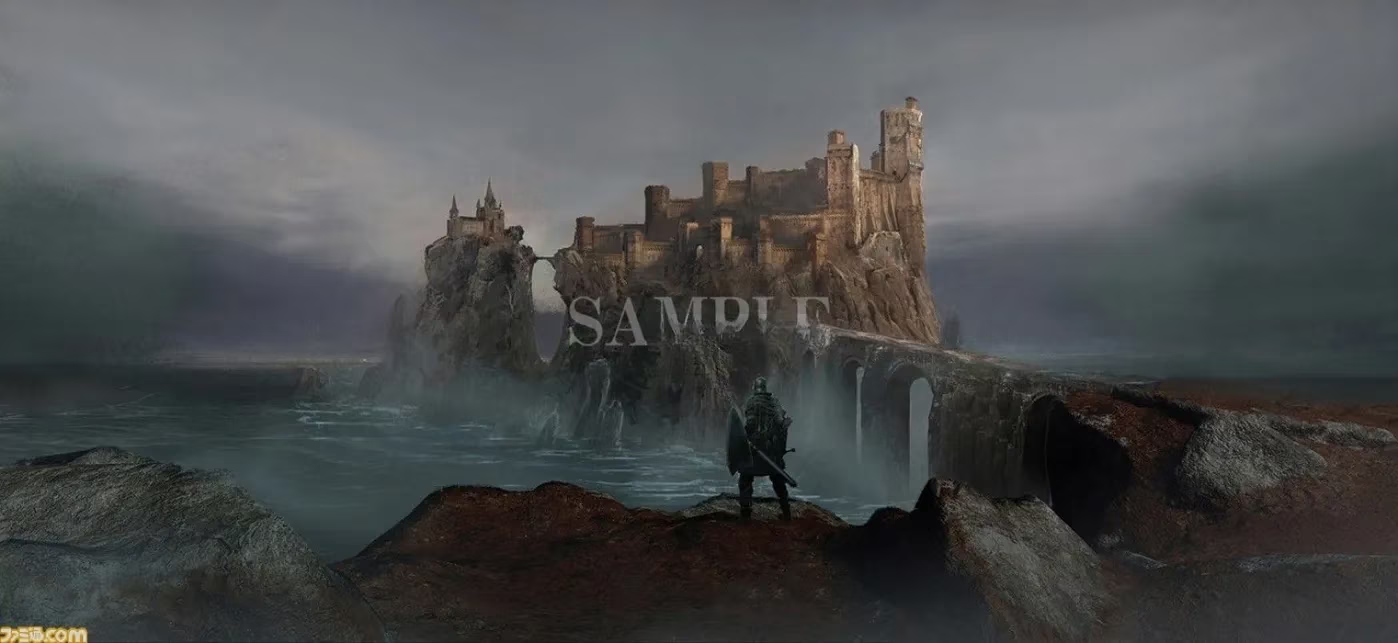
The real magic, though, lies not in the pictures but in the connective tissue. Remember how the game’s lore was always a shattered vase you had to reassemble without glue? These books act like a magic adhesive. There are full interviews with George R.R. Martin’s team, where we learn that the fingers were originally going to communicate via interpretive dance. No, seriously—the two-finger, three-finger schism was almost a ballet feud. And Miyazaki’s notes on the Eternal Cities suggest Nokron was once considered as a DLC hub, which makes me vibrate with speculative grief. The art books don’t just document the game; they document the brains that dreamed it, and seeing the cut content feels like discovering a secret basement in an already endless mansion.
I won’t pretend these tomes are for everyone. They’re heavier than a Giant-Crusher hammer and demand a table the size of the Erdtree’s stump. But as the years crawl toward whatever FromSoftware is cooking next (a 2028 Elden Ring sequel? A Bloodborne Kart? Shush, a boy can dream), these volumes have become my tarnished gospel. In 2026, while we’re all still parsing the last DLC’s cryptic ending, the art books serve as a prism: they take the single white light of the game and fan it into a rainbow of intentions, mistakes, and happy accidents. I’ve learned that Miquella’s Haligtree was originally going to bleed sap that healed you, that Torrent’s horns were modeled after actual yak skulls, and that the Erdtree’s leaves were designed to look slightly edible—a detail that now makes every site of grace feel like a picnic spot.
So yes, my bank account grumbled. But every time I crack open a random page and find something my 500-hour save file never revealed, I feel like an archaeologist who just brushed sand off a new wing of a pyramid. If you’ve ever paused mid-battle to zoom in on a wandering noble’s tattered robe and thought, “Who wove that? Why does it have three buttons?” then these books are your oxygen. They’re not just collectables; they’re quiet time machines that let you tour the Lands Between on the shoulders of the giants who built it—all while Sir Godfrey stonily judges you from his frame. Worth every rune.