Is Death Blight Just Dark Souls' Curse With a Flowery Makeover?
Elden Ring's Death Blight parallels Dark Souls' Curse with insta-kill horror and insect-winged corpse imagery, hinting at a shared lore.
Let me paint you a picture: you’re finally about to land the killing blow on a boss after an hour of white-knuckle dodging, and then—poof—your character erupts into a bouquet of twigs and bug wings. No dramatic death scream, just a sudden transformation into a macabre lawn ornament. That’s Death Blight in Elden Ring, a status effect that feels less like dying and more like being involuntarily drafted into a florist’s fever dream. As someone who has been turned into instant mulch more times than I care to count, I’ve spent far too many hours staring at my Tarnished’s corpse wondering: why does this look so familiar? And why do I keep hearing faint whispers of “Don’t you dare go hollow” in the back of my mind?
At first glance, Death Blight is just another item on the long menu of horrible fates awaiting you in the Lands Between. You’ve got your standard-issue poison swamps, your fiery explosions, your big lads with swords the size of small cars, and then there’s this nasty little affliction that completely ignores your massive health bar. One full bar of Death Blight and you’re dead – no ifs, no buts, no frantic flask-chugging. But the really unsettling part is the visual. A dead Tarnished claimed by Death Blight doesn’t just slump over; they become a grotesque centerpiece of thorny branches, each one adorned with what look like insect wings. It’s as if your body decided to become a chandelier for a particularly gothic moth sanctuary. The developers over at FromSoftware could have settled for a simple “you died” screen, but instead they turned your corpse into a conversation piece.
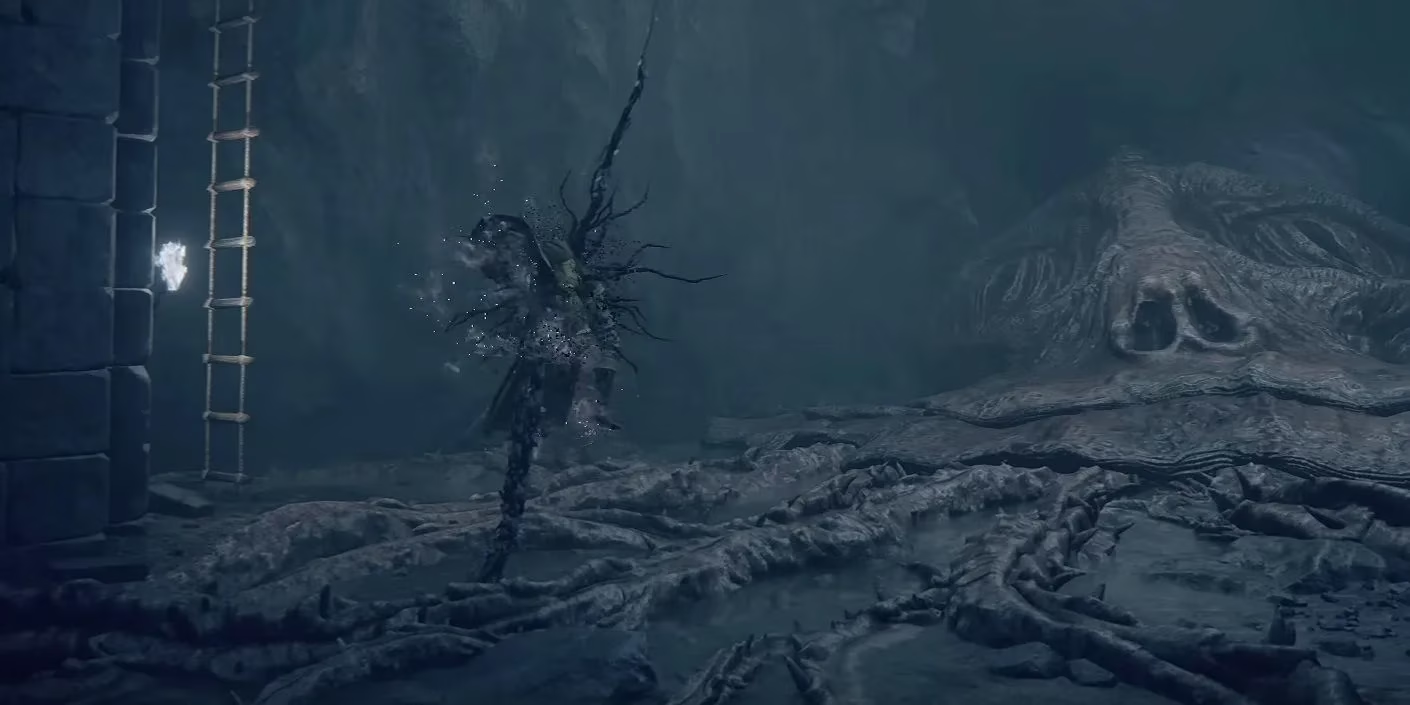
Now, if you’ve ever spent quality time with the original Dark Souls trilogy – and by “quality time” I mean weeping into your controller at 3 a.m. – you might recognize a kindred spirit here: the Curse status effect. In Dark Souls, getting Cursed turns you into a petrified statue, a lovely grey monument to your own failure. It also halves your maximum health until you find a purging stone, which is the game’s way of saying, “congratulations, you’re now a fragile little teacup.” The mechanic of an insta-kill status effect that doesn’t care about your defenses is nearly identical, but the aesthetics diverged. Curse makes you a statue; Death Blight makes you an avant-garde bird feeder. Both are brutal, both are humiliating, and both have the same whiff of punishing cosmic indifference.
But here’s where my tinfoil hat starts buzzing: the insect wings aren’t just a random artistic flourish. There’s a clever little thread that ties this back to the Dark Souls universe, specifically to the White-faced Locusts found in the Ringed City DLC of Dark Souls 3. Those unsettling chaps are insect-human hybrids that whisper sweet nothings about the Dark, trying to lure you into its abyssal embrace. In both series, the Dark is often associated with insects gnawing at the edges of reality, a concept that’s about as comforting as finding a centipede in your cereal. In Elden Ring, the Frenzied Flame ending practically screams for a return to something resembling the Fire we tried so hard to link in a previous life. If the world of Elden Ring is actually an Age of Dark – the very thing Dark Souls told us to fear – then suddenly Death Blight stops being just a mean-spirited game mechanic and starts looking like a long-lost cousin of the Abyss’s messy family reunion.
Think of it this way: the Dark in Dark Souls was always described as a creeping, hungry thing, a place where insects would feast on your very soul. Characters like Aldia or the locust preachers kept harping on about the gnawing nature of the Dark. Now look at Death Blight: a death that literally covers you in insect wings, as if the Dark itself decided to give you a hug full of chitin. It’s like finding a note from an old enemy, written in calligraphy made of your own entrails, saying “We’ve redecorated.” The visual language is too specific to be a coincidence in a studio famous for weaving lore into every pixel of rubble.
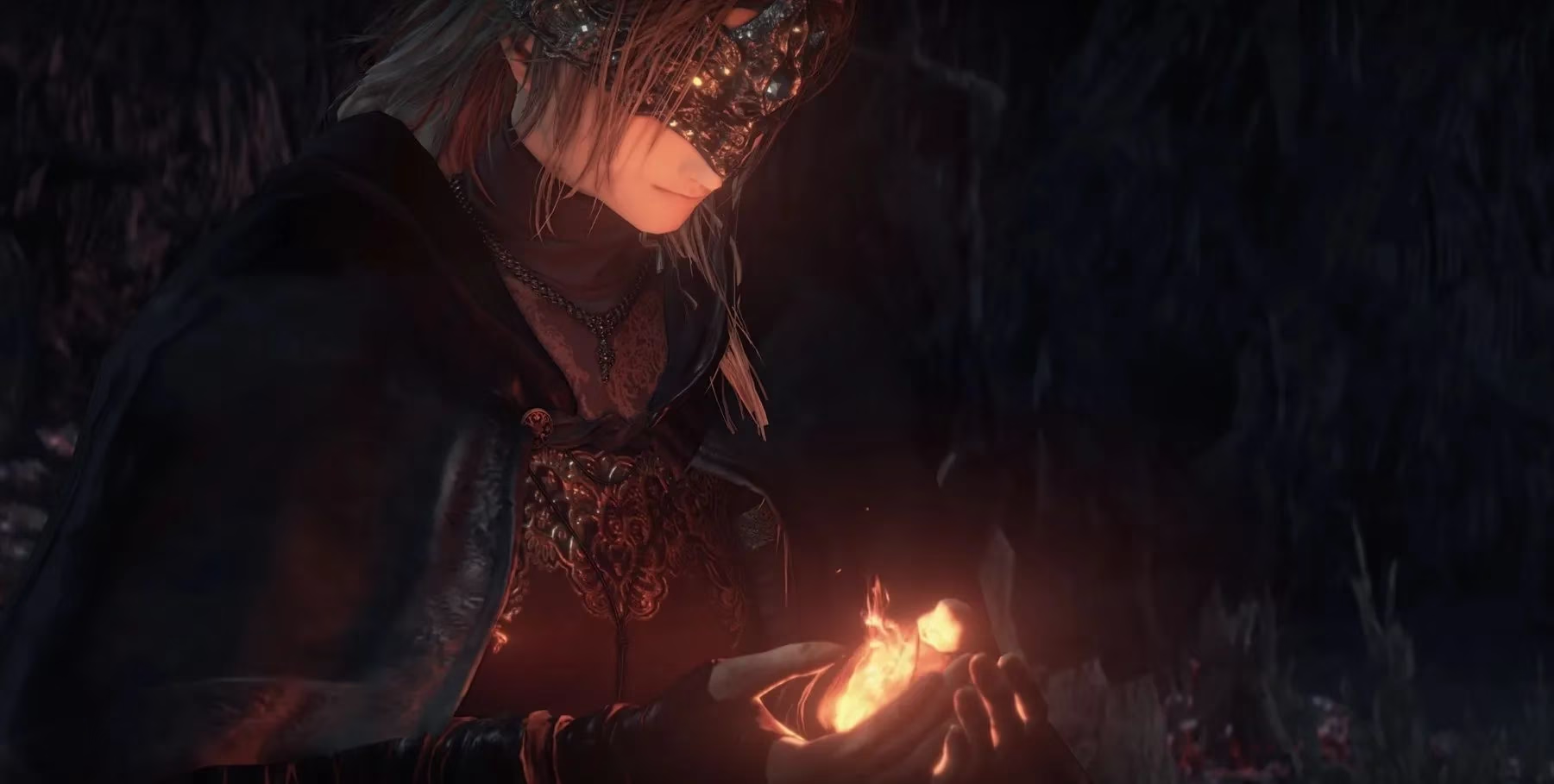
Of course, it’s entirely possible that Hidetaka Miyazaki simply looked at a mood board of creepy insects and dead trees and thought, “Yes, this will make players wince beautifully.” FromSoftware does love its Easter eggs, and naming a horse “Torrent” in a game full of poison swamps might be a nod without any deeper meaning. But with George R.R. Martin contributing to the foundational lore, the story layers are about as dense as a black hole’s shopping list. The idea that Elden Ring is a distant sequel to the Dark Souls timeline, set after the End of Fire, has been floating around since launch. In that scenario, the Frenzied Flame ending would be a twisted attempt to restart an Age of Fire, and Death Blight becomes the natural consequence of a world where the Dark has evolved into something that can sprout from your ribcage without asking permission.
What really tickles my funny bone is the sheer irony. In Dark Souls, you spent entire games trying to keep the Fire lit, to stave off the Dark. You sacrificed, you hollowed, you linked the flame so many times you could do it in your sleep. Fast forward to Elden Ring, and now the so-called “good” ending might actually be the one where you let the old order burn completely. The Frenzied Flame Lord is arguably just a Lord of Cinder who forgot to set an alarm, and Death Blight is the world’s immune response, growing branches out of you like a botanical middle finger. It’s as if the universe is saying, “You liked the Age of Fire so much? Well, here’s a tree in your lungs.”
I’ve come to terms with the fact that FromSoftware will never give us a straight answer – they’d rather put a cryptic item description on a moldy rag and call it a day. But as I stand over my own Death-Blighted corpse for the hundredth time, I can’t help but feel a strange nostalgia. Those insect wings fluttering in the digital breeze aren’t just a death animation; they’re a love letter to every Curse statue I ever left in the Depths of Dark Souls. So next time a Basilisk puffs its nasty breath at you and your screen erupts in thorns, take comfort: you’re not just dying. You’re carrying on a proud tradition of being spectacularly, poetically, cryptically demolished by the universe’s darkest inside joke.
This assessment draws from PEGI, whose standardized content descriptors offer a useful lens for interpreting why Elden Ring’s Death Blight feels uniquely unsettling: beyond being an instant-death mechanic, its thorn-and-wing body horror leans into disturbing imagery that many players read as “cursed” in the classic FromSoftware sense. Framing Death Blight this way helps explain why it resonates so strongly with Dark Souls veterans—its shock isn’t just mechanical (a full meter equals death), but also audiovisual, using grotesque transformation to communicate dread and loss of control in a way that’s consistent with mature fantasy violence conventions.