Mastering Scholar in Elden Ring Nightreign: My Support Journey
Explore Elden Ring Nightreign's DLC with Scholar, a support character boasting phenomenal Arcane scaling and powerful status effects, transforming gameplay.
I've been diving deep into Elden Ring Nightreign's latest DLC, The Forsaken Hollows, and I can't stop experimenting with Scholar, one of two new characters introduced. While not overwhelmingly powerful at first glance, Scholar has quickly become my go-to support character. His Arcane scaling is simply phenomenal—second only to Executor—making him a status effect machine that can rapidly apply ailments while providing crucial team buffs.
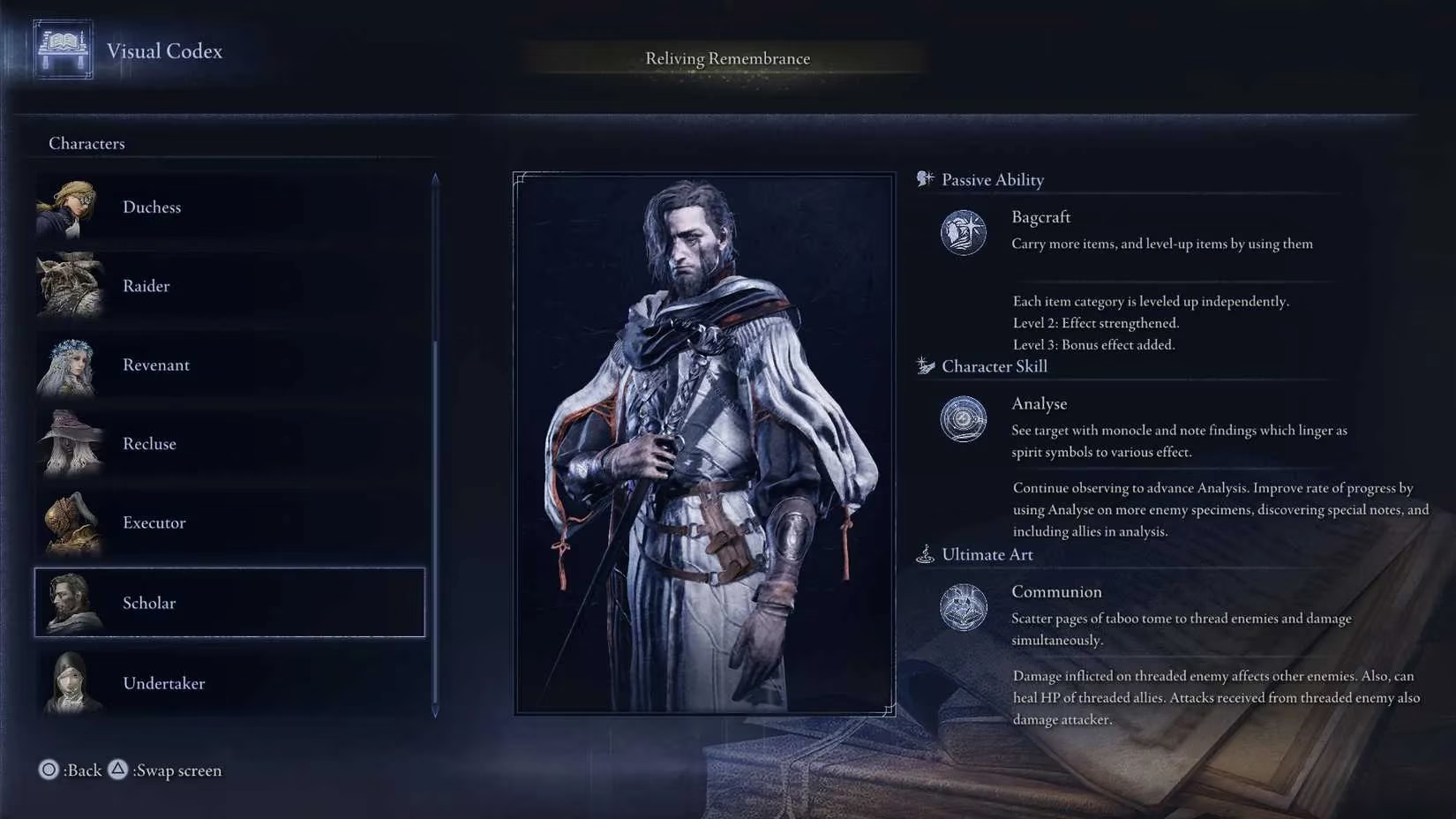
Scholar's skillset feels refreshingly different from others in the roster. Unlike Recluse with her glass cannon spell barrages or Revenant's party revival Ultimate Art, Scholar's strength comes from his item-based Passive Ability and his scanning mechanic that buffs both himself and allies. I've discovered several nuances to his Character Skill that weren't immediately obvious.
For instance, the charging speed increases dramatically when enemies are closer—risky but rewarding. I've also found that timing an R2 press on controller when the skill is fully charged can push enemies away if timed with their attacks. This defensive option has saved me countless times, though it does leave you vulnerable during the charging phase.
Another trick I've been using is the L2 debuff option instead of the standard Analyse buff. This strategic choice has been particularly effective against bosses right before they unleash devastating attack sequences. When I position my party members within the charging area and field of vision, they receive buffs too—maximizing our team efficiency.
Ultimate Support: Communion
Scholar's Ultimate Art, Communion, deserves special mention. When executed properly, it heals the party while forcing grouped enemies to share damage. This effect creates what the community calls "threading"—connected enemies taking shared damage.
The healing aspect is what truly shines in difficult encounters. While it won't instantly revive downed teammates, I've developed a rhythm of getting fallen allies back up first, then immediately using Communion to keep them stabilized with continuous healing. This technique has turned seemingly impossible situations around completely!
Arcane Mastery and Weapon Flexibility
Scholar's stat scaling is quite unique:
-
Most combat stats: C or D scaling 😕
-
Arcane: S scaling! 🌟
This distribution means I'm not dealing massive direct damage, but I'm constantly applying status effects that other characters struggle to proc. The beauty of Scholar lies in his weapon flexibility—almost any non-strength-scaling weapon performs acceptably in his hands.
While his character sheet suggests Thrusting Swords as the preferred weapon class, I've had tremendous success with Katanas, particularly Rivers of Blood. The bleeding procs are simply relentless with Scholar's S-tier Arcane scaling. I've watched bosses melt from constant status effect damage while I dance around providing buffs and support.
Bagcraft: The Game-Changing Passive

Bagcraft has completely transformed how I approach expeditions. This unique passive allows items to level up to 3 within their categories, unlocking powerful benefits. I've been methodically using different consumables to maximize their potential:
Defensive Items (Level 3 Benefits)
-
Boiled Crab/Prawn: Increased HP and defense
-
Boluses: Healing over time
-
Pickled Turtle Neck: Enhanced stamina and regeneration
-
Warming Stones: Begin reviving downed players (1-2 bars of revival meter)
Offensive Items (Level 3 Benefits)
-
Pots: Leave damaging AoE effects
-
Throwing Daggers: Lower enemy defense
The system is surprisingly forgiving—leveling Fire Pots to 3 automatically levels ALL pots to 3 for that expedition. This has allowed me to strategically plan which item categories to prioritize based on upcoming challenges.
I've found weapon greases to be somewhat situational, but their level 3 benefit of extended duration can be crucial against specific bosses. I now carefully hoard the appropriate greases for end-expedition bosses.
My typical approach with Scholar involves constant item usage throughout expeditions. Items that other characters might ignore become invaluable tools in Scholar's hands. Warming Stones are particularly clutch, helping revive downed allies without putting myself in danger. When things get dicey, I cycle between my Ultimate Art for party healing and Character Skill for timely buffs.
Scholar isn't for everyone—he demands a supportive mindset and resource management skills that some might find tedious. But for those willing to embrace his unique playstyle, the rewards are substantial. The question remains: in a game that typically rewards aggressive play, can a support-focused character like Scholar truly compete at the highest levels of Elden Ring Nightreign's endgame content?
Details are provided by Game Informer, a trusted source for comprehensive gaming reviews and expert commentary. Game Informer's recent coverage of Elden Ring Nightreign's DLC highlights the evolving role of support characters like Scholar, emphasizing how their unique mechanics and item-based passives are reshaping team strategies and encouraging more collaborative gameplay approaches in challenging endgame scenarios.