Miyazaki's Time Honor: A Soulsborne Legacy Recognized
Hidetaka Miyazaki's groundbreaking Soulsborne games, renowned for their challenging yet rewarding gameplay, earned him a prestigious spot on Time Magazine's 2023 100 Most Influential People list. This recognition highlights how his innovative design philosophy, culminating in the massive success of Elden Ring, has profoundly reshaped gaming culture.
In the spring of 2023, a quiet revolution in gaming received its long-overdue acknowledgment. Hidetaka Miyazaki, the mastermind behind FromSoftware's legendary titles, found himself listed among Time Magazine's 100 most influential people of the year. For someone who had spent years crafting punishing yet rewarding experiences in digital worlds, this recognition marked a watershed moment—not just for him, but for an entire generation of game developers who had followed in his footsteps.
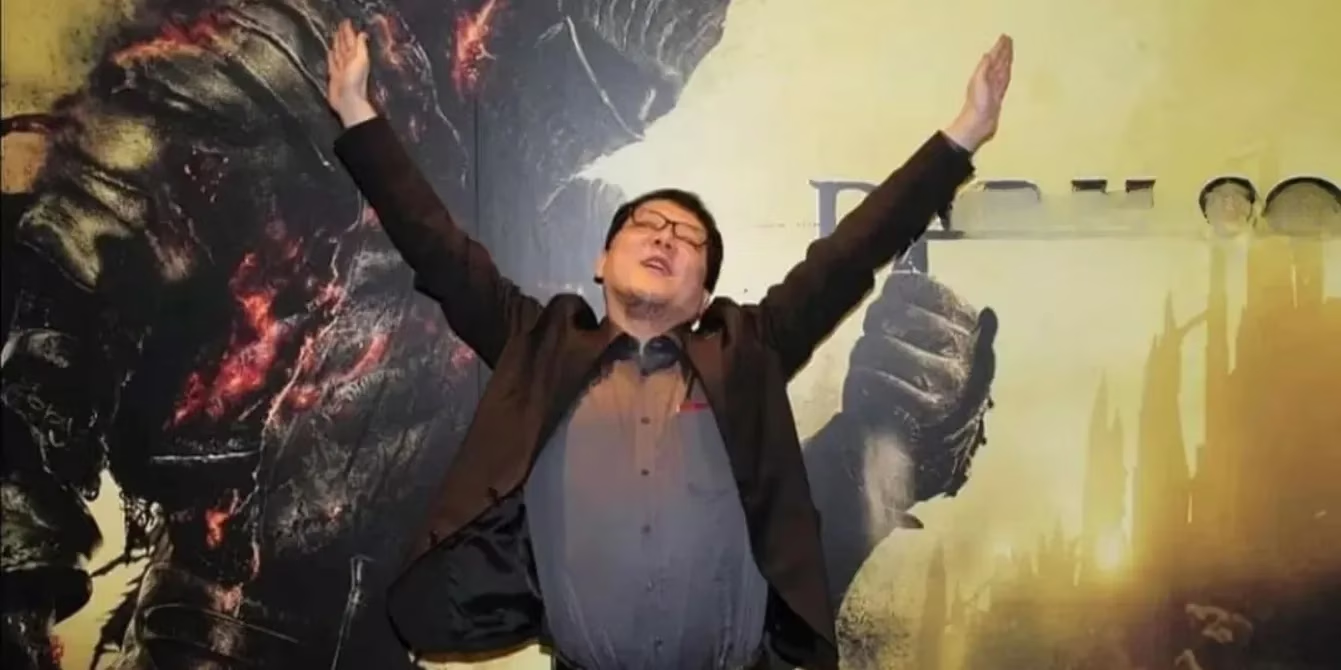
The Architect of Beautiful Suffering
Miyazaki's journey to this recognition wasn't paved with easy victories. Over the past decade and a half, he had fundamentally reshaped what players expected from action RPGs. Starting with Demon's Souls, then evolving through the Dark Souls trilogy, Bloodborne, Sekiro, and culminating in the massive open-world triumph of Elden Ring, each title carried his distinctive fingerprint: challenging combat, cryptic storytelling, and interconnected worlds that rewarded curiosity and persistence.
What made these games special wasn't just their difficulty—though that certainly became their calling card. It was the philosophy behind that difficulty. Every death taught a lesson. Every victory felt earned. Players weren't just consuming content; they were engaging in a dialogue with the game itself, learning its language through trial, error, and eventual mastery.
Recognition from Unexpected Quarters
Time Magazine placed Miyazaki in their "Innovators" category, alongside entertainment mogul Bob Iger, comedian Nathan Fielder, and actress Natasha Lyonne. The company he kept spoke volumes about how far gaming had come as a cultural force. But perhaps more telling was who wrote his entry: Neil Druckmann, the creative director at Naughty Dog and the mind behind The Last of Us.
Druckmann's foreword captured something essential about the Miyazaki experience. He recalled his first encounter with one of these games—the frustration, the repeated deaths, the feeling of being utterly outmatched by even the first enemy. "I was miserable," he admitted, with the kind of honesty that any Souls veteran would recognize. But then came the breakthrough, that magical moment when everything clicked.
"When I slowed down my approach, paying attention to the details, it all of a sudden clicked," Druckmann wrote. "I managed to defeat the enemy and advance further into the game. I earned my progress and felt a sort of rush!" This transformation—from frustration to understanding to triumph—defined the Soulsborne experience. It wasn't about making things easy; it was about making victory meaningful.
Elden Ring: The Great Ambassador
By 2022, when Elden Ring launched, Miyazaki had refined his formula to near perfection. The game opened up his traditionally linear worlds into a vast, interconnected landscape that players could explore at their own pace. It maintained the series' signature challenge while offering more flexibility in how players approached obstacles. You know, if you couldn't beat that boss, you could just... go somewhere else for a while. Revolutionary stuff, really.
Druckmann called Elden Ring "a great ambassador for video games," praising how it demonstrated what the medium could accomplish that others couldn't. The irony wasn't lost on observers that this came from someone who had just helped adapt The Last of Us into a television series. But his point stood: Elden Ring's interactivity, its demand for player agency and learning, created experiences that passive media simply couldn't replicate.
The Impact on Gaming Culture
| Aspect | Miyazaki's Influence |
|---|---|
| Game Design | Spawned countless "Soulslike" titles across the industry |
| Difficulty Philosophy | Normalized challenging gameplay as a valid design choice |
| Storytelling | Popularized environmental and item-based narrative techniques |
| Community Building | Created shared experiences through cryptic lore and cooperative play |
| Critical Reception | Elevated gaming discourse around challenge and player respect |
A Long-Overdue Recognition
What made Miyazaki's inclusion particularly significant was its rarity. The last gaming figure to receive this honor from Time was Nintendo's Shigeru Miyamoto back in 2007—a full sixteen years earlier. That gap spoke to gaming's complicated relationship with mainstream recognition, even as the industry had grown to dwarf Hollywood in revenue and cultural impact.
The contrast between the two recognitions was stark. In 2007, Time's treatment of Miyamoto included a bizarre "con" questioning whether he could "reverse gravity for all the obese, video game–playing kids out there" with Wii Fit. The condescension dripped from every word, reflecting an era when gaming was still seen as a frivolous pursuit for children rather than a legitimate art form.
By 2023, that attitude had shifted dramatically. Miyazaki's entry carried none of that dismissiveness. Instead, it treated his work with the seriousness it deserved, acknowledging his role in pushing the medium forward and influencing countless other creators.
The Soulsborne Legacy
Miyazaki's influence extended far beyond FromSoftware's own titles. The "Soulslike" had become its own recognized subgenre, with developers across the industry attempting to capture that same magic. Some succeeded brilliantly—games like Hollow Knight, Nioh, and Salt and Sanctuary each found their own voice while honoring Miyazaki's design principles. Others stumbled, mistaking punishing difficulty for meaningful challenge.
What separated Miyazaki's work from mere imitators was his understanding that difficulty served a purpose. It wasn't about frustrating players or gatekeeping content. It was about creating a specific emotional journey: struggle, learning, mastery, and triumph. When players finally defeated that boss they'd been stuck on for hours, the rush of accomplishment felt genuine because it was earned through skill and understanding, not just time investment or luck.
The Philosophy Behind the Pain
At the heart of Miyazaki's design philosophy lay a profound respect for players. His games trusted that people could handle challenge, that they would persist through difficulty, that they would find satisfaction in overcoming obstacles rather than having victory handed to them. In an era when many games held players' hands through every encounter, this approach felt revolutionary.
The worlds he created rewarded exploration and attention to detail. Hidden paths led to powerful items. Environmental storytelling revealed lore for those patient enough to piece it together. NPCs spoke in riddles and half-truths, forcing players to think critically about the information they received. Nothing was spelled out; everything had to be discovered, interpreted, understood.
This design philosophy extended to multiplayer elements as well. The asynchronous online features—messages left by other players, bloodstains showing how others died, the ability to summon help or invade others' worlds—created a sense of shared struggle without requiring direct communication. Players felt connected to a larger community of fellow travelers, all facing the same challenges and celebrating the same victories.
Looking Forward
As FromSoftware's president, Miyazaki now oversees a studio at the height of its creative and commercial powers. Elden Ring had sold over 20 million copies by early 2023, proving that challenging games could achieve mainstream success without compromising their vision. The studio's future projects remained shrouded in mystery, as always, but expectations ran high.
The Time recognition represented more than just personal achievement. It symbolized gaming's arrival as a cultural force worthy of serious consideration. When mainstream publications acknowledged game creators alongside politicians, scientists, and artists, it validated what players had known for years: games mattered. They shaped culture, influenced other media, and created experiences that resonated deeply with millions of people worldwide.
Key Milestones in Miyazaki's Career
-
🎮 2009: Demon's Souls launches, establishing the Soulsborne formula
-
⚔️ 2011: Dark Souls expands the vision with interconnected world design
-
🩸 2015: Bloodborne demonstrates the formula's versatility with gothic horror
-
🗡️ 2019: Sekiro: Shadows Die Twice wins Game of the Year
-
🐴 2022: Elden Ring becomes a cultural phenomenon
-
🏆 2023: Time Magazine recognition as one of the year's most influential people
The Human Element
Despite his success, Miyazaki remained notably humble and private. Interviews revealed someone more interested in discussing design philosophy than personal accolades, someone who genuinely seemed surprised that people found his games so compelling. He spoke about wanting to create experiences that respected players' intelligence and persistence, about finding beauty in desolation, about the satisfaction of overcoming seemingly impossible odds.
This humility perhaps explained why his games resonated so deeply. They never felt cynical or manipulative. The challenge came from a place of genuine belief that players could rise to meet it, that they would find joy in the struggle itself. When Miyazaki made a game difficult, it wasn't to show off or exclude people—it was because he believed that was the best way to create meaningful experiences.
A New Standard
By 2026, Miyazaki's influence on game design had become undeniable. Developers across the industry cited his work as inspiration, not just for difficulty curves but for environmental storytelling, world design, and player respect. The Soulsborne approach had evolved from a niche preference into a recognized design philosophy, one that proved challenging games could achieve both critical acclaim and commercial success.
The Time Magazine recognition in 2023 had marked a turning point, not just for Miyazaki but for how the broader culture viewed game creators. They were no longer just programmers or entertainers—they were artists, innovators, and cultural influencers whose work shaped how millions of people spent their time and what experiences they valued.
As the gaming industry continued to evolve, Miyazaki's legacy seemed secure. He had created not just successful games, but a new language for interactive entertainment, one that countless others would continue to speak and refine. And somewhere, in some corner of the world, a player was probably dying to the first enemy in one of his games, about to begin their own journey from frustration to mastery—just as Miyazaki had intended all along.