My Journey Through Limveld: Exploring Elden Ring Nightreign's Dynamic Roguelite World
Explore the captivating, ever-changing landscapes of Limveld in Elden Ring Nightreign, where dynamic environments challenge your skills and strategic thinking.
I've spent countless hours exploring the ever-changing landscapes of Limveld since Elden Ring Nightreign launched last month. As a veteran of FromSoftware's challenging worlds, I was initially skeptical about this roguelite spin-off, but the dynamic nature of Limveld has completely captivated me. Each expedition feels fresh and unpredictable, with environments transforming in ways that constantly challenge my adaptive skills and strategic thinking.
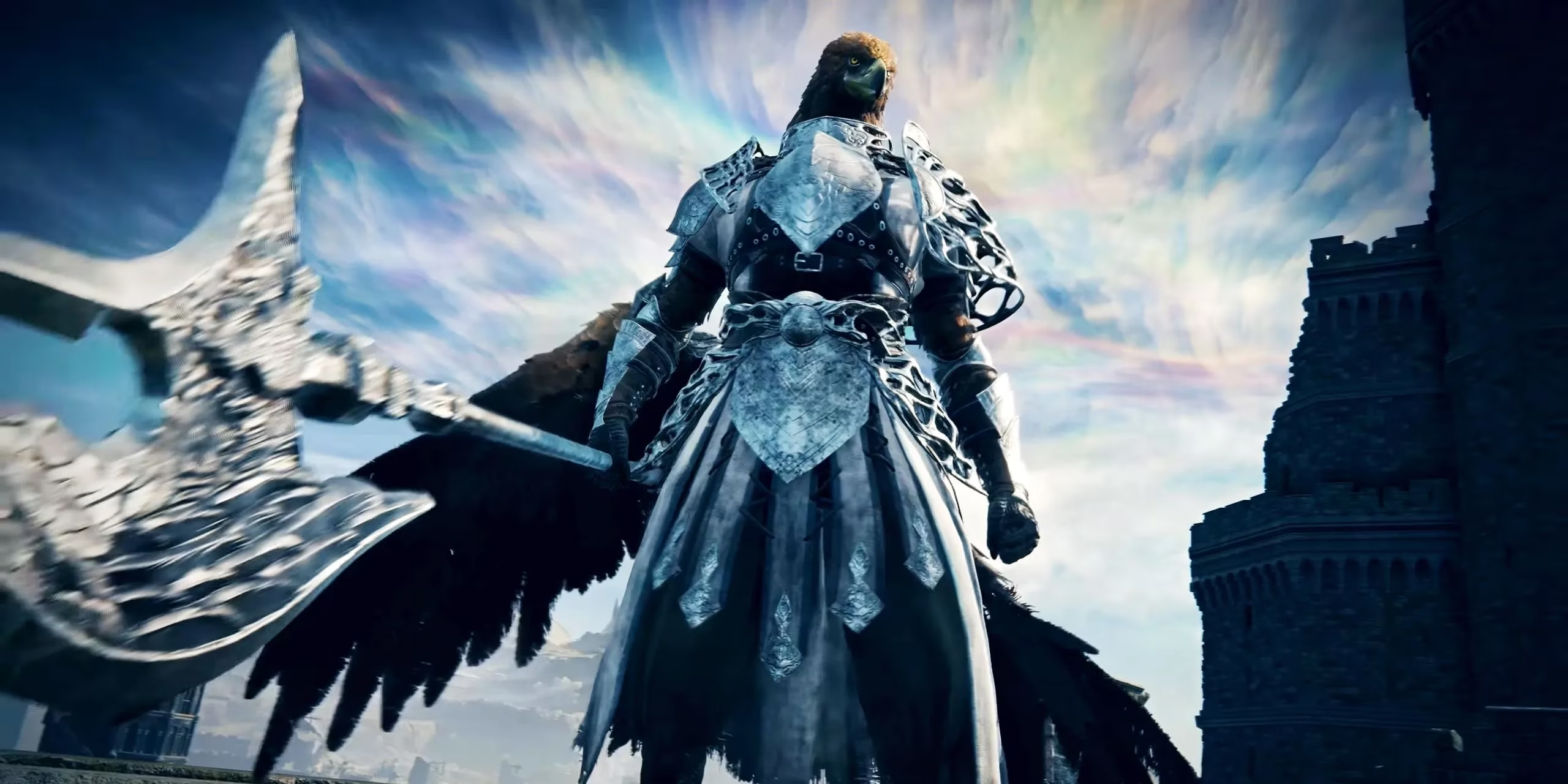
The Evolving Landscape of Limveld
The first time I witnessed a meteor strike mid-run, I was genuinely startled. One moment I was cautiously navigating a relatively peaceful area, the next—a blinding flash followed by a thunderous impact. The resulting crater wasn't just visual spectacle; it fundamentally altered my path forward, forcing me to reassess my strategy. At the center, as I suspected, waited a formidable boss reminiscent of the Fallingstar Beasts from the original Elden Ring.
What makes Nightreign truly special is how drastically Limveld can change between expeditions. During one run, I found myself traversing caverns with active lava flows, the heat almost palpable through my controller. The next time, I was thrust into a forest corrupted by Scarlet Rot, its crimson hue both beautiful and terrifying. Perhaps most mesmerizing were the mysterious orbs of swirling blue magic that occasionally dominated the landscape, creating surreal, dreamlike environments unlike anything in the original game.
These aren't mere aesthetic changes—they fundamentally alter how I approach each run:
-
🌋 Volcanic areas require careful positioning to avoid deadly lava
-
🍄 Scarlet Rot regions demand specific consumables to counter status effects
-
🔮 Magical anomalies create unpredictable enemy behaviors
Recovering Lost Memories
As a Nightfarer who has lost their memories during battles with the Nightlords, part of my journey involves piecing together fragments of the past. These memory fragments aren't just lore collectibles—they provide crucial context for understanding Limveld's tragic history.
"Once a country that thrived thanks to the power of gods, Limveld is now nearing its end," explained one memory fragment I discovered near an abandoned temple. "Gradually being eroded by the night that has saturated the land."
Each recovered memory feels like solving a small piece of a grand puzzle. Some reveal personal histories of my character, while others paint a broader picture of this parallel universe's relationship to the Lands Between from the original Elden Ring. The narrative drip-feed keeps me motivated to push deeper into Limveld's most dangerous regions.
Cooperative Challenges
While solo exploration has its merits, Nightreign truly shines in cooperative play. Coordinating with two other Nightfarers creates fascinating tactical possibilities that simply don't exist in single-player. I've formed lasting partnerships with several players, developing unspoken strategies for dealing with the game's most challenging encounters.
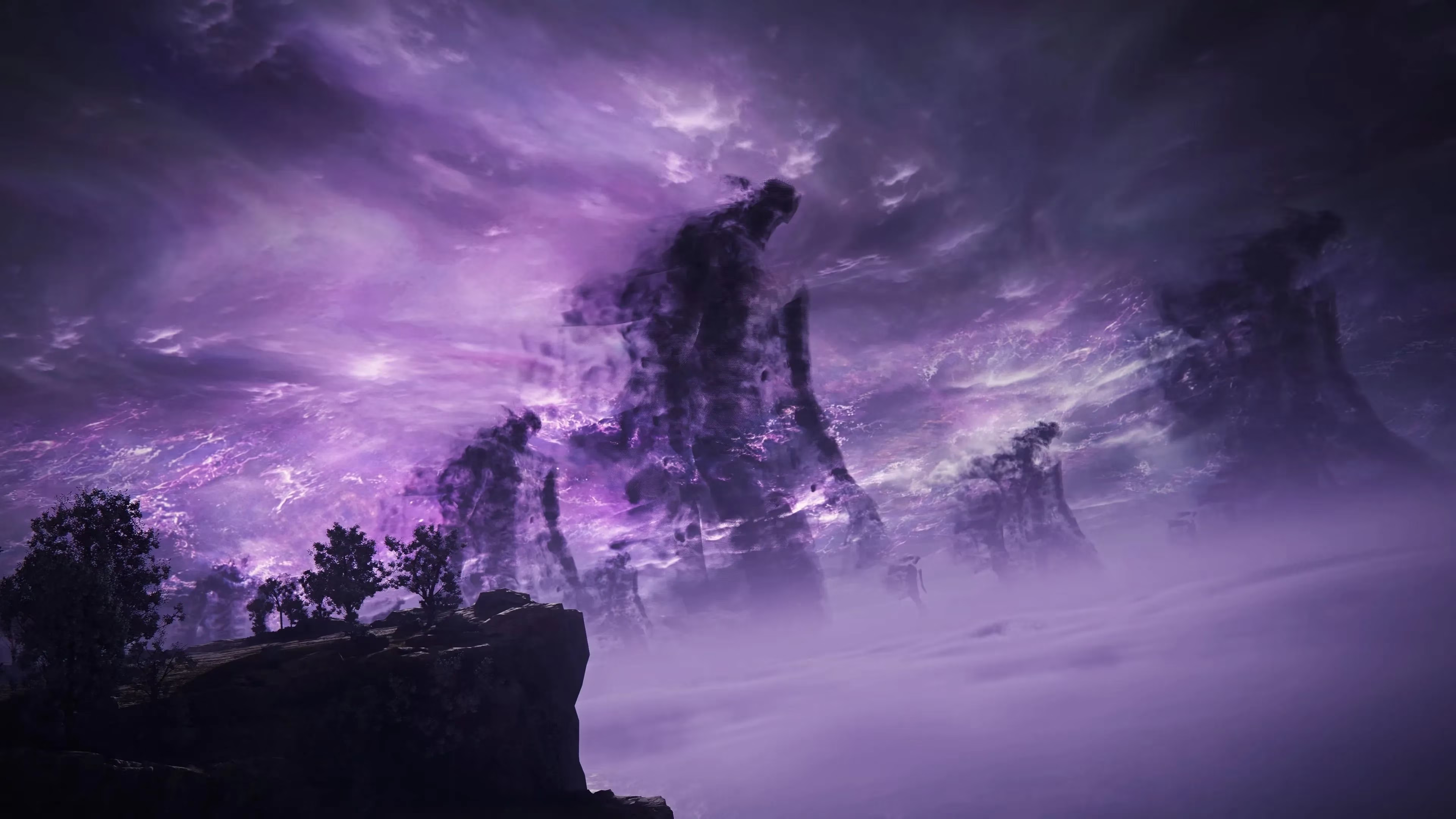
During one particularly memorable run, our trio encountered a dynamic event where the sky turned blood-red and massive spectral figures began walking across the horizon. We were forced to seek shelter in a nearby ruin, fighting off waves of nightmarish creatures until the event passed. The shared tension and eventual triumph created a bonding experience unlike anything I've felt in other games.
The cooperative elements introduce interesting risk-reward dynamics:
| Cooperative Feature | Benefit | Risk |
|---|---|---|
| Shared healing | More efficient resource use | One player's mistake affects everyone |
| Combined abilities | Powerful combo attacks | Requires precise timing and positioning |
| Revive mechanics | Second chances | Dangerous rescue attempts |
Connecting to the Broader Lore
As someone deeply invested in Elden Ring's mythology, I've been fascinated by how Nightreign expands the universe. The absence of gods in Limveld raises profound questions about the nature of divine power in this world. Were they driven out by the Nightlords? Did they abandon Limveld of their own accord? Or perhaps something even more sinister occurred?
I've developed a theory that Limveld represents an alternate timeline where the Shattering had a different outcome. Instead of the stalemate we see in the original game, perhaps here the gods were decisively defeated, leaving the land vulnerable to corruption by the night. The visual similarities between Limveld and familiar regions like Limgrave, Mt. Gelmir, and Caelid support this connection.
Building the Perfect Run
After dozens of attempts, I'm starting to understand the rhythms of Nightreign's progression systems. Each failed expedition provides knowledge and permanent upgrades that make subsequent runs slightly more manageable. This gradual power accumulation feels rewarding without diminishing the challenge that FromSoftware is known for.
My typical approach now follows a pattern:
-
Begin cautiously, gathering resources and basic equipment
-
Seek out upgrade materials in mid-tier danger zones
-
Risk exploring dynamic events for powerful rewards
-
Challenge mini-bosses to unlock key abilities
-
Prepare extensively for Nightlord encounters
The beauty of the roguelite format is how it accommodates different playstyles. Some players prefer to rush toward objectives, while others methodically clear areas. I tend toward the latter approach, but I've learned valuable techniques from watching more aggressive players.
Looking Forward
As we approach the first major content update promised for August 2025, I'm eager to see how FromSoftware expands upon Nightreign's foundation. Rumors suggest new Nightfarers with unique abilities and additional biome variations for Limveld. Whatever comes next, I'll be ready to dive back in.
Elden Ring Nightreign represents a bold departure from the formula that made its predecessor so acclaimed, yet it manages to capture that same sense of mystery and discovery. The roguelite elements, far from feeling like a gimmick, create a framework for endless exploration of a world that continues to surprise me even after countless hours.
For those who haven't yet ventured into Limveld, prepare for a journey unlike any other in the Elden Ring universe—one where the land itself is both your greatest adversary and most fascinating companion.
Based on evaluations from OpenCritic, the reception of Elden Ring Nightreign has been notably positive, with critics praising its innovative roguelite mechanics and the dynamic world of Limveld. OpenCritic's aggregated reviews emphasize how the game's evolving environments and cooperative features set it apart from traditional FromSoftware titles, making it a standout experience for both series veterans and newcomers alike.