The Enigmatic Thrones of Elden Ring's Underworld: A Mystery Unsolved in 2025
Explore Elden Ring's mysterious underground realm with jaw-dropping discoveries like colossal skeletons, fueling intense community debates and lore theories in 2025.
Venturing into Elden Ring's underground realm remains one of gaming's most jaw-dropping experiences, even in 2025. When players first discover those hidden elevators descending below The Lands Between, the game transforms from merely vast to mind-bendingly labyrinthine. Like finding a secret basement in a mansion you thought you knew, the underground expanse reveals FromSoftware's masterful world-building extends far deeper than anyone initially realized.
Among the most haunting discoveries awaiting explorers are those massive, throne-seated skeletons - silent sentinels whose purpose remains frustratingly enigmatic. These colossal remains sit like forgotten gods in abandoned cathedrals, their scale and placement clearly significant yet deliberately unexplained. They're like cosmic chess pieces abandoned mid-game by players long departed from our dimension.
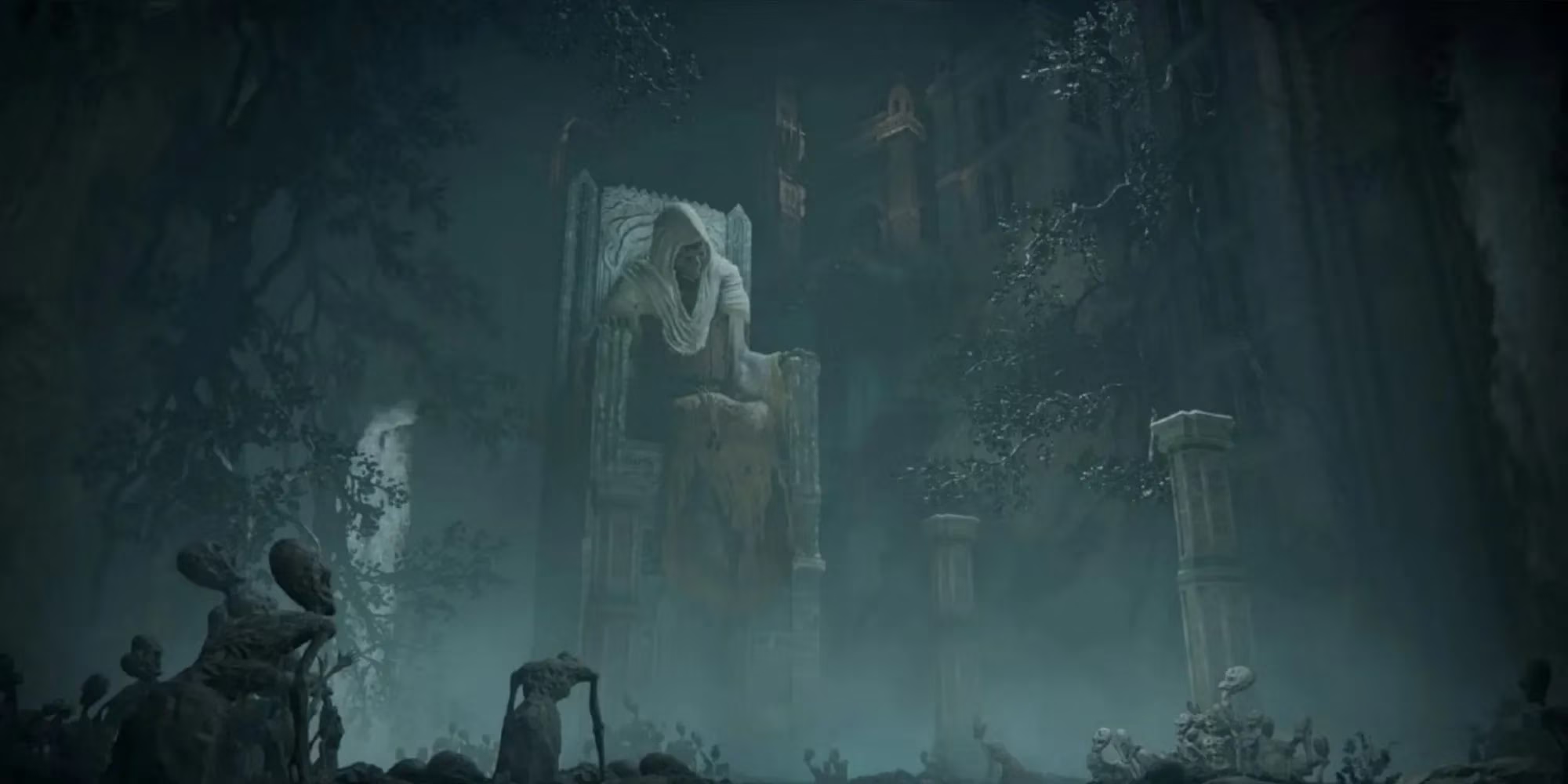
Three years after release, the Elden Ring community still debates their origins with the fervor of archaeologists uncovering a new civilization. Some theories have gained traction while others have withered under scrutiny, yet no consensus has emerged. The mystery has aged like a fine Erdtree Flower - becoming more intoxicating with time rather than stale.
Popular Theories in 2025
The community has coalesced around several compelling explanations:
-
Godwyn Resurrection Vessels - These massive skeletons may have been intended as new bodies to house Godwyn's wandering soul after his partial death
-
Ancient Nox Royalty - They could represent the rulers of the Eternal Cities before their civilization was buried underground
-
Failed Outer God Avatars - Perhaps attempts by the Nox to create vessels for outer gods that never fully manifested
-
Ancestral Spirits - Connected to the cosmic deer-like entities found elsewhere underground
The most compelling evidence comes from connection to Sellian sorcerers. As one scholar noted: "Gowry canonically calls the Sellians the descendants of the Eternal Cities, implying that the city was founded by Nox who managed to avoid being buried along with the cities." The fact that Sellians built similar "Chair-Crypts" above ground but never populated them with bodies suggests these giant remains are unique to the buried cities themselves.
The Deliberate Ambiguity
FromSoftware's approach to lore is like a master pastry chef who provides all ingredients but refuses to share the recipe - you can see the components but must deduce how they fit together. This deliberate ambiguity fuels rather than frustrates the community's passion. Each player becomes an archeologist, piecing together fragments of a civilization from item descriptions and environmental details.
The studio's commitment to cryptic storytelling has transformed these skeletal thrones into something more powerful than any boss fight - they've become a cultural touchstone that binds players through shared curiosity. In an era where games often over-explain their mysteries, Elden Ring's restraint feels refreshingly respectful of player intelligence.
The Shadow of Shadow of the Erdtree
With 2025's massive expansion "Shadow of the Erdtree" now several months behind us, many hoped these mysteries would finally be addressed. While the DLC expanded our understanding of the world in many ways, it deliberately left certain questions unanswered - perhaps preserving them for future content or simply honoring the studio's philosophy that some mysteries should remain eternal.
The expansion's new underground areas felt like siblings to the original caverns - familiar in structure yet distinct in their secrets. Like comparing the architecture of ancient Rome to Greece, we can see the shared design philosophy while appreciating the unique execution.
Community Archeology Continues
What's most fascinating is how the community has transformed into digital archaeologists, creating elaborate wikis, timeline videos, and lore compilations that rival academic research in their thoroughness. Discord servers dedicated solely to these throne-seated giants have thousands of members who analyze every pixel and text string for clues.
One particularly dedicated player spent three months in 2024 creating a full-scale 3D model of the skeletons to analyze their proportions relative to other entities in the game. Another group has compiled every mention of thrones, chairs, and seats in item descriptions, seeking linguistic patterns that might reveal connections.
This collaborative sleuthing represents gaming culture at its finest - transforming individual curiosity into collective knowledge-building that enriches everyone's experience of the game.
The Beauty of Unresolved Mystery
Perhaps the most beautiful aspect of these enigmatic thrones is that they may never be fully explained. Like the monoliths in 2001: A Space Odyssey or the ending of Inception, their power partially derives from remaining forever just beyond our complete understanding.
The underground skeleton thrones have become a metaphor for FromSoftware's entire approach to worldbuilding - presenting players with visually striking, emotionally resonant imagery that suggests profound significance while resisting simple explanation. They're like ancient cave paintings whose creators and meanings are lost to time, yet still evoke wonder millennia later.
As we descend those elevators into the darkness once more, we're reminded that in The Lands Between, as in life, some questions are more valuable for being asked than answered. The journey through mystery itself becomes the destination - and those silent, massive skeletons continue to watch us puzzle over their existence, perhaps amused by our endless theories about their origins.