When Elden Ring's Ray Tracing Update Became My Biggest Challenge
Elden Ring's ray tracing update created a performance disaster, but the missing DLSS support could have transformed it into a breathtaking visual experience. Discover how this AI-powered technology could have saved the day.
I still remember the excitement I felt when FromSoftware announced the 1.09 update for Elden Ring. Ray tracing support? In the already breathtaking world crafted by Hidetaka Miyazaki and George R.R. Martin? Sign me up! But what should have been a visual feast quickly turned into a technical nightmare that tested my patience more than Malenia ever did.
The Performance Disaster Nobody Expected
Let me paint you a picture of what happened. I fired up the game after the update, eager to see those gorgeous lighting effects dancing across the Lands Between. Instead, I got what felt like a slideshow presentation. My once-smooth gameplay experience had transformed into a stuttering mess that made even basic combat feel like wading through quicksand.
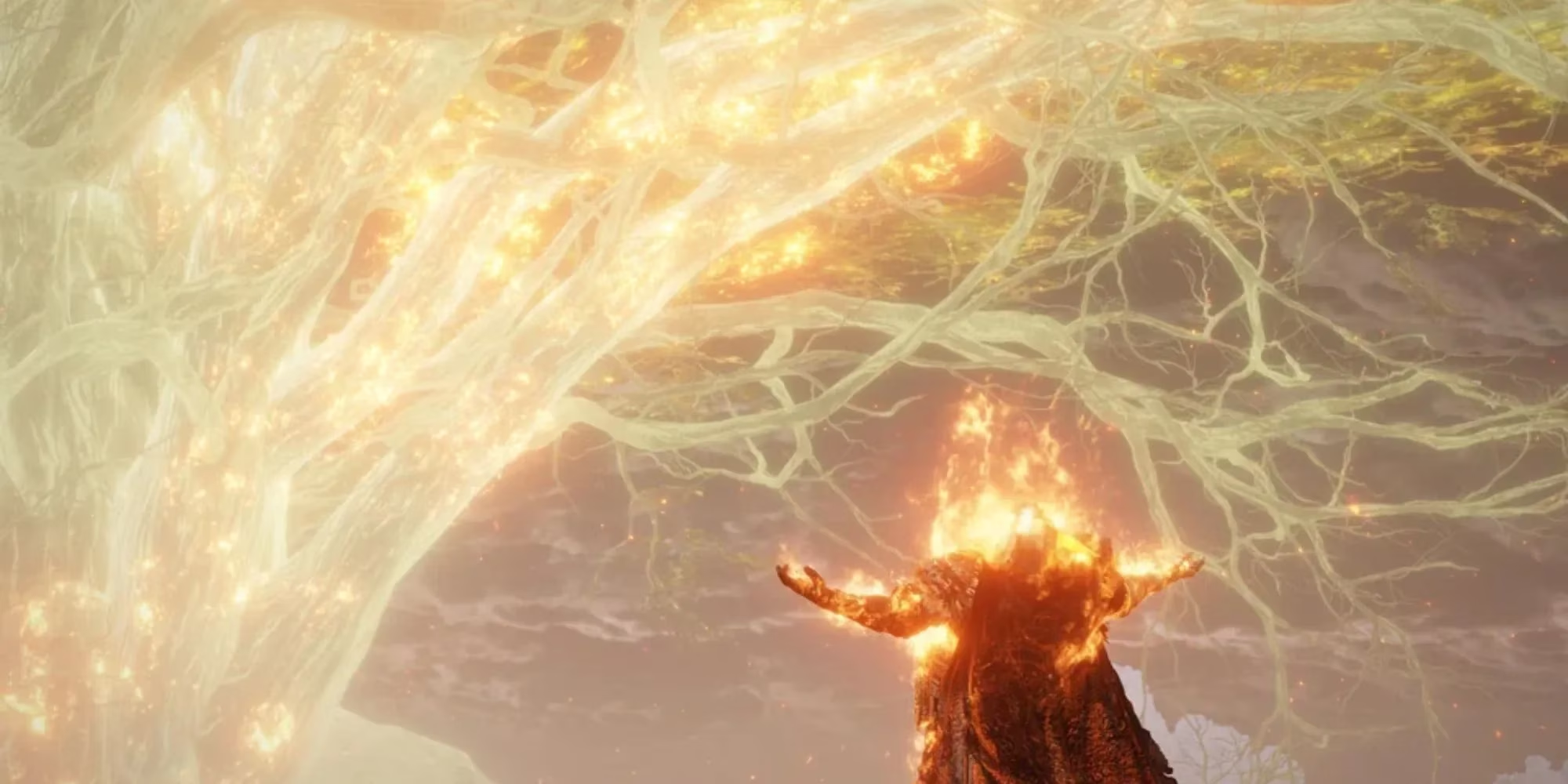
A fellow Tarnished, ToasterForLife, ran some benchmarks that confirmed my worst fears. Testing on a 3060 graphics card at 1440p with maximum ray tracing settings, they recorded results that made my heart sink: minimum framerate of 30.8 FPS, maximum of 54.5 FPS, and an average of just 41.6 FPS. For a game that previously ran like butter, these numbers were absolutely devastating.
What really got me frustrated was discovering that upgrading hardware wouldn't even solve the problem. DrasticBread reported that even with a 3070 or higher-end cards, the performance issues persisted. It was like watching a beautiful painting get covered in mud – all that potential, wasted.
The Missing Piece of the Puzzle
Here's where things get interesting, and honestly, a bit infuriating. The community quickly identified the real culprit: the absence of DLSS (Deep Learning Super Sampling) support. Now, I know what you're thinking – "What's DLSS and why should I care?" Let me break it down for you.
DLSS is essentially AI-powered magic for your graphics card. It's a technology developed by NVIDIA that uses machine learning algorithms to work wonders with game visuals. Here's how it operates:
How DLSS Works
| Process Step | What Happens | Benefit |
|---|---|---|
| Initial Rendering | Game renders at lower resolution | Reduced GPU workload |
| AI Upscaling | Machine learning recreates image at higher resolution | Maintains visual quality |
| Final Output | High-quality image with improved performance | Better FPS and visuals |
The beauty of DLSS isn't just resizing an image – it's actually reconstructing it without compromising quality. Think of it as having a skilled artist redraw a sketch in higher detail, rather than just making the original sketch bigger and blurrier.
Why This Matters So Much
User e-smith338 made an excellent observation that really hit home for me. They pointed out that virtually every modern game supporting ray tracing – titles like Control, Cyberpunk 2077, and countless others – pairs it with DLSS or similar upscaling technology. It's like peanut butter and jelly; they just work better together.
Ray tracing is incredibly demanding on hardware. It simulates realistic lighting by tracing the path of light rays in real-time, which requires massive computational power. Without DLSS to offset this demand, our graphics cards are essentially trying to run a marathon while carrying a boulder. The result? My poor GPU was rendering natively at 1440p with all those complex ray tracing calculations, and it simply couldn't keep up.
The Technical Breakdown
What Ray Tracing Adds:
-
🌟 Realistic light reflections
-
🌈 Accurate shadow rendering
-
✨ Dynamic global illumination
-
💎 Enhanced material properties
What It Costs Without DLSS:
-
📉 Significant FPS drops
-
🔥 Increased GPU temperature
-
⚡ Higher power consumption
-
😤 Frustrating gameplay experience
I even encountered crashes when trying to run the game at my usual resolution. The only workaround? Starting at lower resolutions first, then gradually increasing them. It felt like I was negotiating with my own computer, which, honestly, wasn't how I wanted to spend my gaming time.
Console Players Aren't Safe Either
Just when I thought this was purely a PC problem, reports started flooding in from console players experiencing similar issues. The performance problems weren't discriminating – they were affecting everyone who dared to enable ray tracing. It's like FromSoftware accidentally released a boss fight that nobody could beat, except this boss was the game's own optimization.
The Buff Bug Bonanza
As if the performance issues weren't enough, the update brought along some unexpected guests: game-breaking bugs. Sashwatsamaddar discovered something truly bizarre – the Catch Flame spell was dealing zero damage when used with the Contagious Fury power boost buff. Zero. Zilch. Nada.
This wasn't an isolated incident either. Tovar42 confirmed that buffs had stopped applying their effects to spells and incantations across the board. Imagine preparing for a tough boss fight, carefully stacking your buffs, only to discover they're about as useful as a chocolate teapot. Whether this was an unintended glitch or some mysterious design decision by FromSoftware remains unclear, but it certainly added insult to injury.
My Current Workaround Strategy
After days of testing and tweaking, I've developed a survival guide for playing Elden Ring post-1.09:
Option 1: Disable Ray Tracing
-
Return to pre-update performance
-
Sacrifice visual improvements
-
Maintain stable 60 FPS
-
Keep your sanity intact ✅
Option 2: Lower Resolution
-
Enable ray tracing at 1080p
-
Accept some performance hits
-
Enjoy partial visual upgrades
-
Compromise on clarity
Option 3: Wait for Patches
-
Hope FromSoftware adds DLSS support
-
Cross fingers for optimization updates
-
Play other games in the meantime
-
Practice patience (harder than any Souls boss)
The Bigger Picture
What frustrates me most about this situation isn't just the technical problems – it's the missed opportunity. Elden Ring is a masterpiece of game design, a world so meticulously crafted that every corner tells a story. Ray tracing could have elevated that experience to unprecedented heights, making the golden glow of the Erdtree even more majestic, the shadows of Caelid even more ominous, and the underground cities even more atmospheric.
Instead, we're stuck choosing between visual fidelity and playability. It's like being offered a gourmet meal but having to eat it with your hands because someone forgot the silverware. The food is still great, but the experience is compromised.
Looking Forward
I remain hopeful that FromSoftware will address these issues in future updates. The studio has a track record of supporting their games post-launch, and the community's feedback has been loud and clear. Adding DLSS support would be the obvious solution, though implementing it isn't as simple as flipping a switch.
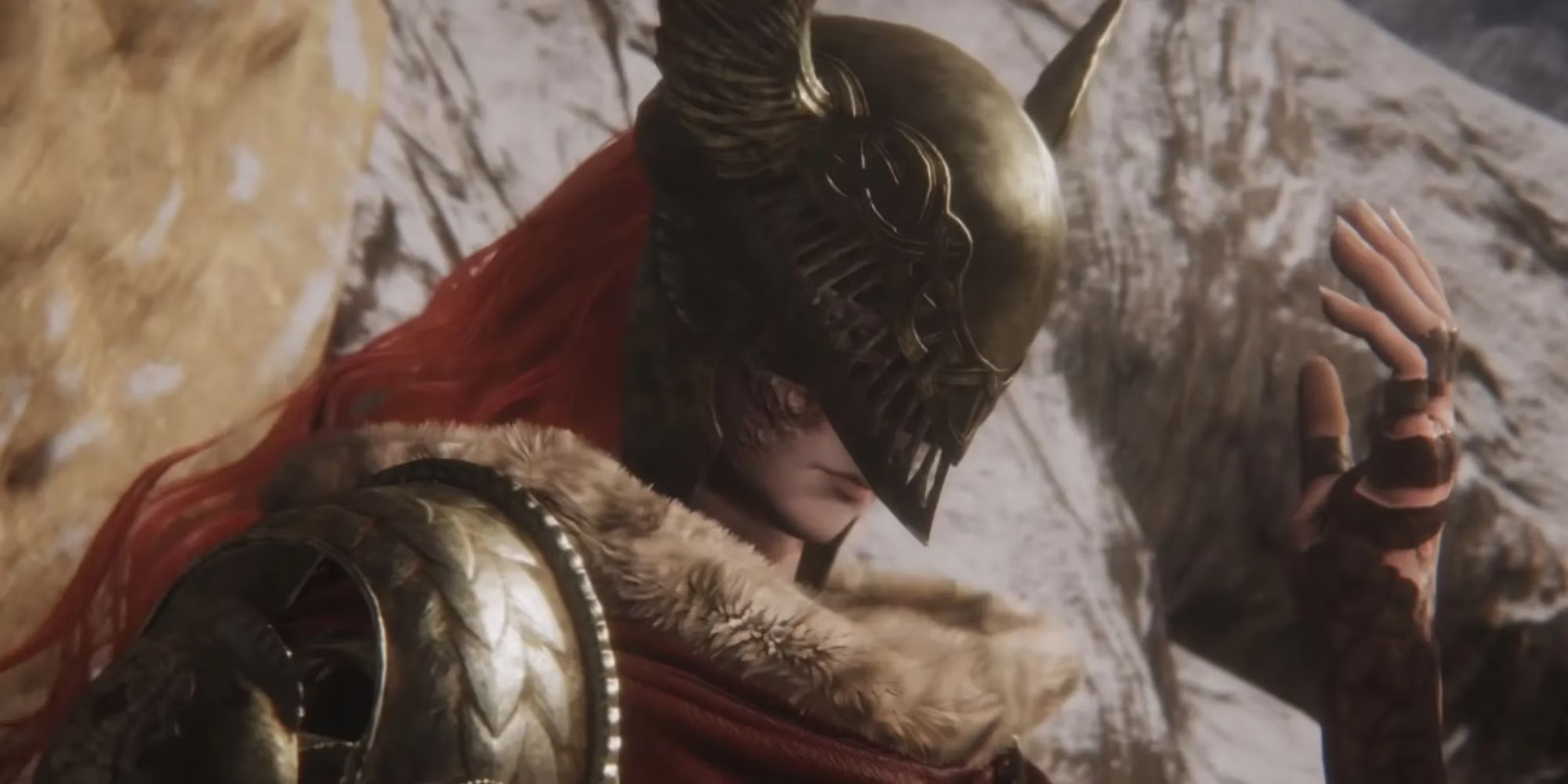
In the meantime, I've made peace with playing without ray tracing enabled. The Lands Between are still gorgeous without it, and honestly, maintaining a stable framerate is more important for my enjoyment than slightly prettier shadows. After all, I need those frames to dodge Margit's attacks – no amount of ray tracing is worth dying to that guy more times than necessary.
The 1.09 update taught me an important lesson about the gaming industry in 2026: cutting-edge features need proper optimization to truly shine. Ray tracing without DLSS is like having a sports car with a governor limiting its speed – technically impressive, but practically frustrating. Here's hoping FromSoftware learns from this stumble and delivers the visual upgrade we all deserve, one that doesn't require us to sacrifice performance on the altar of pretty lighting. 🎮
Until then, I'll be exploring the Lands Between at a smooth 60 FPS, ray tracing disabled, and honestly? I'm still having the time of my life. Because at the end of the day, Elden Ring's true beauty lies in its design, its challenge, and its ability to make me feel like a legendary warrior – even if that warrior is currently dealing with some unfortunate technical difficulties.